

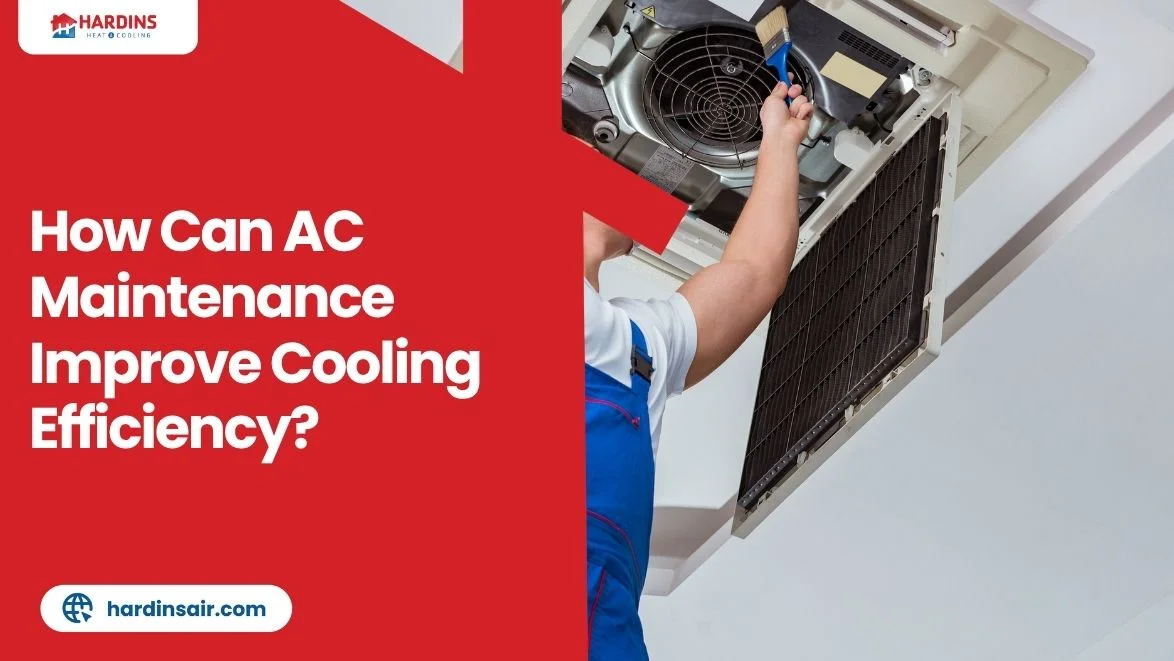
Regular AC maintenance improves cooling efficiency by supporting several essential system functions. It keeps airflow steady, heat transfer effective, and refrigerant performance balanced. Dirt, restricted airflow, worn parts, and incorrect settings increase operating strain. That extra effort often causes longer cycles and less comfort. Routine service removes those obstacles before they become bigger problems. It also helps your equipment cool evenly during demanding summer weather.
Key Takeaways
|
How Does AC Maintenance Improve Cooling Efficiency?
Your air conditioner cools by moving indoor heat outside. That process depends on proper airflow, clean components, and correct system operation.
Replacing Dirty Air Filters Improves Airflow
A clogged filter restricts air returning to your cooling system. The blower must work harder to pull air through it. Reduced airflow weakens cooling and can lengthen cooling cycles. Severe restriction may also contribute to evaporator coil icing. Check your filters regularly during periods of heavy summer use. Homes with pets or remodeling dust may need faster replacement.
Cleaning the Evaporator Coil Improves Heat Absorption
The evaporator coil absorbs heat from passing indoor air. Dust covering that coil acts like an insulating layer. As heat transfer worsens, cooling capacity can fall. Heavy dirt and poor airflow may also encourage icing. Maintenance appointments include checking the coil condition and removeing buildup when necessary.
Cleaning the Condenser Coil Improves Heat Release
The outdoor condenser releases heat collected from inside your home. Dirt, leaves, cottonwood, and grass clippings can block airflow. Restricted airflow makes heat release harder and raises operating stress. Keep vegetation and debris away from the cabinet.
Maintaining the Blower and Fan Improves Air Circulation
The indoor blower pushes conditioned air through your ductwork. Dust buildup can reduce how effectively it moves air. Worn motors or poor speed settings can create similar problems. The outdoor fan also moves air across the condenser coil. A maintenance check ensures both fans are operational and have proper airflow.
Checking Refrigerant Charge Helps Maintain Cooling Performance
Refrigerant carries heat between your indoor and outdoor equipment. Correct charge helps maintain proper cooling capacity and operating pressures. Too little refrigerant can weaken cooling and suggest leakage. Too much refrigerant can create different operating and pressure problems. Technicians use pressure and temperature readings to accurately evaluate charge.
Checking Electrical Components Prevents Efficiency Loss
Electrical components keep motors and controls operating reliably. Capacitors, contactors, terminals, and wiring can deteriorate with age. Loose connections may create resistance and unwanted heat. Weak components can also make motors struggle during startup. Routine maintenance includes careful inspections and important electrical measurements.
Calibrating the Thermostat Prevents Unnecessary Runtime
Your thermostat decides when the cooling system starts and stops. Incorrect thermostat readings can easily create unnecessary cooling system runtime. Placement also affects how accurately it senses room conditions. Direct sunlight or nearby heat sources can distort readings. Maintenance confirms proper thermostat response and normal cooling system cycling.
Clearing the Condensate Drain Supports Proper System Operation
Cooling removes moisture from indoor air along with heat. That moisture must drain safely from the indoor unit. Algae, dust, and sludge can block the condensate line. Water may then back up or trigger a safety switch. Drain cleaning supports reliable operation and prevents moisture-related shutdowns.
What AC Maintenance Tasks Have the Biggest Impact on Cooling Efficiency?
Airflow and heat-transfer maintenance usually provide the largest benefits. Dirty filters, clogged coils, and weak fan performance deserve early attention. Correct refrigerant charge also matters when cooling has weakened. Electrical faults and thermostat errors can increase runtime unnecessarily.
The biggest improvement depends on your system’s condition. A badly clogged filter may improve airflow immediately after replacement. Professional air conditioning service in Yukon, OK, can identify several efficiency problems during one visit.
Can Regular AC Maintenance Lower Energy Bills?
Yes, maintenance can reduce cooling costs when inefficiency causes extra runtime. Clean filters reduce airflow resistance and support proper circulation.
Clean coils improve heat transfer during each cooling cycle. Correct refrigerant charge also helps maintain intended system performance. However, maintenance cannot guarantee a specific bill reduction. Weather, insulation, duct leakage, electricity rates, and thermostat habits also matter. Maintenance helps remove avoidable energy waste and restores intended operation.
What Is Included in an AC Maintenance Service?
A thorough maintenance visit examines both equipment sections. It should also verify actual cooling performance while the system operates.
Indoor Unit Inspection
Indoor inspection focuses on airflow, cleanliness, drainage, and electrical condition. Technicians check the filter, evaporator coil, blower, and drain components. They also inspect accessible wiring and connections for wear or corrosion. Reliable HVAC contractors in Yukon, OK. should explain findings clearly before recommending repairs.
Outdoor Unit Inspection
Outdoor inspection begins with the condenser coil and surrounding airflow. Technicians check for dirt, vegetation, and physical blockage. They also inspect the condenser fan and electrical components. Visible refrigerant lines and insulation should receive attention too.
System Performance Checks
Cleaning alone cannot confirm that your system operates efficiently. Performance testing shows how the equipment behaves while actually cooling. Technicians may measure air temperatures, refrigerant conditions, voltage, and current draw. They also observe startup performance and normal system cycling behavior.
How Often Should You Maintain Your AC for Better Cooling Efficiency?
Most cooling systems benefit from professional maintenance once each year. Spring works well because it comes before peak summer demand. Early service can uncover problems before long cooling cycles begin. Your air filters usually need attention much more often. Check them during heavy use and replace them when dirty.
For heating and cooling in Yukon, homeowners know seasonal service prepares equipment before intense heat arrives. Local conditions can place significant demand on cooling systems.
What Are the Signs Your AC Needs Maintenance?
Efficiency problems often develop slowly instead of appearing suddenly. Changes in cooling behavior can show that maintenance is overdue.
Your AC Takes Longer to Cool the Room
Longer cooling cycles may signal declining system performance. Dirty coils, restricted airflow, or refrigerant trouble can reduce capacity. Compare current cooling time with your system’s usual cooling behavior. Extremely hot outdoor weather can also increase normal system runtime.
Airflow From the Vents Feels Weak
Weak airflow often points toward a restriction or blower problem. A dirty filter provides one common and easy-to-check cause. Closed registers or duct issues can reduce airflow too. Check accessible vents and your air filter before requesting service.
Some Rooms Stay Warmer Than Others
Uneven room temperatures often indicate a problem with airflow distribution. Dirty filters, duct leakage, or blocked returns may contribute. Professional maintenance can identify many equipment-related causes behind uneven cooling. Major ductwork problems may require separate inspection and corrective work.
Your AC Runs Almost Constantly
Long runtimes can mean your system struggles to remove heat. Dirty coils, airflow restrictions, or refrigerant problems may be responsible. Thermostat errors can also create similar long-running cooling behavior. Very hot afternoons can also produce longer than normal cycles.
Energy Bills Are Increasing Without More Usage
Rising bills may reveal extra runtime before comfort noticeably changes. Compare similar weather periods for a fairer comparison. Filters, coils, thermostat settings, and duct losses deserve attention.
The System Makes Unusual Sounds
New buzzing, rattling, squealing, or scraping sounds deserve attention. Loose parts, electrical problems, fans, or motors may cause them. Addressing unusual noise early can prevent additional wear.
The AC Starts and Stops Too Frequently
Frequent short cycles prevent steady and efficient cooling. They also create repeated startup stress on electrical components. Thermostat faults, airflow restrictions, or equipment problems can cause short cycling.
The Indoor Unit Shows Ice or Excess Moisture
Ice often means airflow or refrigerant conditions have become abnormal. Continuing system operation can make the icing problem significantly worse. Excess water may indicate a clogged drain or frozen coil. Heavy indoor coil icing always deserves a prompt professional inspection.
Conclusion
Regular AC maintenance improves cooling efficiency by supporting several critical system functions. Proper airflow, clean coils, correct refrigerant levels, and controls all matter. Clean filters and coils often make the biggest difference.
Professional inspections can also uncover small problems before comfort declines. Annual service works best when you check filters during heavy cooling months. That simple habit helps prevent avoidable airflow restriction between appointments. Prompt maintenance can restore comfort before minor issues become expensive repairs.
If your AC cools slowly or runs constantly, don’t ignore it. Contact Hardin’s Heating & Cooling for professional maintenance and reliable system care.