

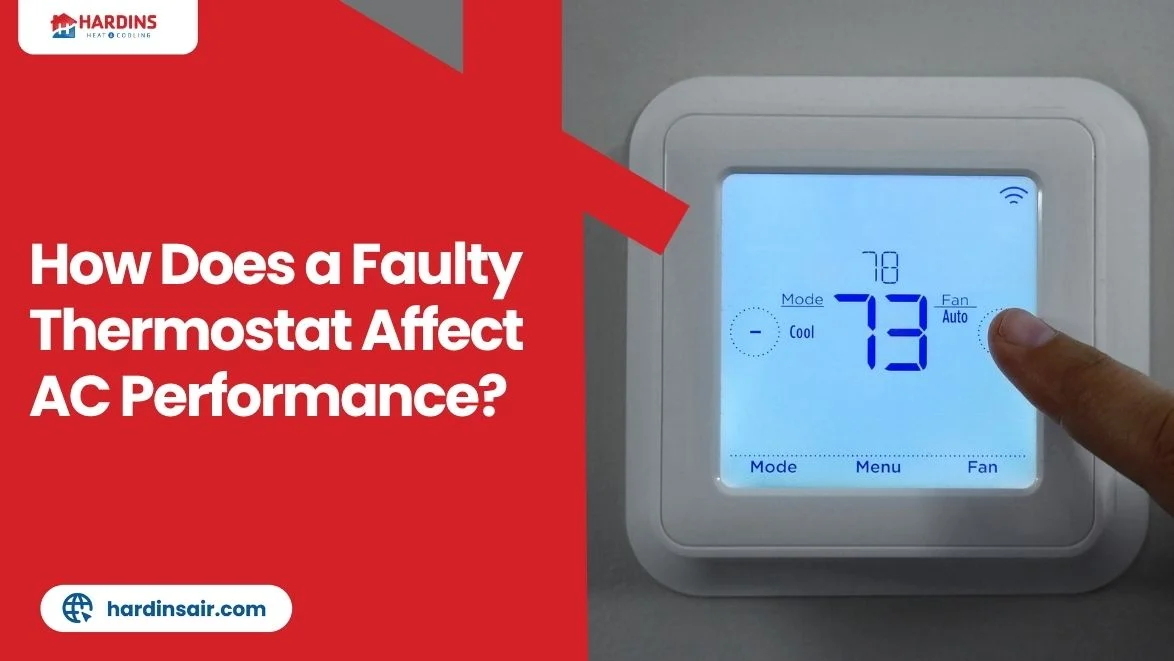
A faulty thermostat can disrupt AC performance by sending incorrect temperature signals. Your system may run too long or stop before cooling finishes. It might also short-cycle, refuse to start, or cool rooms unevenly because these symptoms can resemble larger equipment failures. So, accurate troubleshooting matters. Simple thermostat checks can often reveal the real issue. Other cases require testing of the cooling system itself.
Key Takeaways
|
What Happens When an AC Thermostat Stops Working Properly?
Your thermostat measures room temperature and controls each cooling call. Faulty sensors, wiring, settings, or internal controls can send incorrect commands. The AC may then struggle to maintain steady indoor comfort.
Causes of Inaccurate Indoor Temperature Control
Accurate temperature sensing keeps your cooling cycles matched to indoor conditions. A failing sensor may display 72°F while the room feels warmer. Your AC might then stop before reaching comfortable conditions. The opposite problem can keep cooling active for too long. Dust inside the thermostat can sometimes affect older controls. Sensor wear, calibration issues, and poor placement may also distort readings. Comparing the display with a reliable nearby thermometer can reveal obvious differences indoors.
Causes the AC to Run Too Long
A thermostat reading too high can keep demanding unnecessary cooling. Consequently, the compressor and fans continue operating after comfort improves. Nearby lamps, televisions, sunlight, or warm appliances may cause similar behavior. Their heat can fool the thermostat into sensing hotter conditions. Extended runtime uses more electricity and adds operating hours to components. Check whether surrounding heat sources influence the thermostat during the afternoon. If runtime remains excessive, the sensor or cooling equipment needs further testing.
Causes AC Short Cycling
Short cycling happens when your AC repeatedly starts and stops prematurely. Faulty thermostat wiring can create unstable signals between control components. An inaccurate sensor may also end cooling before a full cycle. Repeated startups increase electrical demand and add mechanical stress to equipment. However, don’t assume the thermostat causes every short cycle. Dirty filters, frozen coils, refrigerant problems, and oversized equipment can behave similarly. A complete diagnosis should identify the actual trigger before repairs begin.
Prevents the AC From Turning On or Off Properly
Your thermostat forms part of the AC control circuit. Dead batteries or incorrect settings may prevent a cooling command. Loose wiring and internal thermostat faults can cause similar failures. Sometimes the opposite occurs, and cooling continues beyond the setpoint. First, confirm cooling mode and lower the selected temperature several degrees. Replace the batteries first, if your thermostat uses them. When commands still produce no response, the problem needs deeper testing. A technician should inspect controls, power, and equipment operation.
Creates Uneven or Inconsistent Cooling
A thermostat only senses the temperature around its installed location. Therefore, poor sensing can leave distant rooms warmer than expected. For example, a thermostat near a cool supply vent may stop cooling early. Rooms farther away could remain uncomfortable even when equipment operates normally. Uneven temperatures can also come from duct leakage or blocked registers. Insulation and return-air problems can affect room temperatures too. Technicians should accurately check the full airflow system before blaming the thermostat alone.
What Are the Signs of a Faulty AC Thermostat?
Thermostat trouble often appears through changes in temperature readings, system response, and cooling cycles. Several warning signs deserve attention before you assume the AC itself has failed.
- The displayed temperature doesn’t match how your home feels. Compare it with a reliable thermometer placed nearby. A noticeable, persistent difference may indicate sensor or placement issues.
- The AC doesn’t respond to your thermostat setting changes. Lowering the setpoint should normally create cooling demand when rooms remain warmer. No response may indicate thermostat, wiring, or equipment trouble.
- The system keeps running beyond your selected temperature setting. Incorrect sensing or control problems may keep cooling active unnecessarily.
- The AC repeatedly starts and stops without finishing cycles. Erratic thermostat signals can contribute to repeated short cycling. Other HVAC problems can create the same pattern.
- The thermostat screen suddenly becomes blank or unresponsive. Batteries, wiring, or power problems may explain the failure.
- Your thermostat settings change unexpectedly without your input. Programming schedules and smart features can sometimes look like faults. Check those options before requesting AC repair services.
Can a Faulty Thermostat Cause an AC to Blow Warm Air?
Yes, a thermostat problem can sometimes lead to warm airflow. An incorrect fan setting may run the blower without active cooling. A faulty thermostat can also fail to send the proper cooling command.
However, warm air has many other possible causes. Low refrigerant, frozen coils, electrical faults, or outdoor-unit problems may stop heat removal. Check the thermostat mode and temperature setpoint first. Persistent warm airflow may require a broader system diagnosis before replacing the thermostat.
Can a Bad Thermostat Cause AC Short Cycling?
Yes, a bad thermostat can contribute to AC short cycling. Inaccurate sensing may stop cooling before the room reaches the target temperature. Faulty wiring can also create repeated or unstable cooling commands.
Those frequent starts increase stress on electrical and mechanical components. Still, thermostat trouble isn’t the only possible cause. Airflow restrictions, coil icing, refrigerant faults, and poor sizing can behave similarly.
Can a Faulty Thermostat Increase AC Energy Bills?
Yes, thermostat faults can raise energy use through unnecessary runtime. Incorrect readings may keep cooling active after rooms feel comfortable. Short cycling can also create inefficient operation and repeated startup demand. Poor programming may cool an empty home more than necessary.
Homeowners searching for AC repair in Yukon, OK, should also consider weather and equipment conditions. Rising bills can result from duct leakage, dirty coils, airflow problems, or changing electricity rates.
How Does Thermostat Placement Affect AC Performance?
Even a working thermostat can control cooling poorly if it’s placed in the wrong location. The sensor needs conditions that represent your normal living space. Nearby heat, cold, sunlight, or drafts can distort readings.
- Direct sunlight can create falsely high temperature readings. The thermostat may call for cooling even when occupied rooms already feel comfortable.
- Televisions and lamps add local heat near thermostats. Nearby electronics can make the sensor believe the whole home feels warmer.
- Supply vents can cool the thermostat too quickly. Direct cold airflow may end a cycle before distant rooms reach their target.
- Doors and drafty spaces cause rapid temperature changes. Outdoor air can influence readings whenever doors open frequently.
- Exterior walls may reflect unusual surface temperatures indoors. Insulation and sun exposure can make those locations less representative.
- Unused rooms can provide poor thermostat control points. A rarely occupied space may not reflect temperatures where your family spends time.
- Central interior locations usually provide steadier temperature sensing. Compatible remote sensors can also help average temperatures across important rooms.
How Can You Tell If the Thermostat or AC Is Causing the Problem?
Start with thermostat settings before assuming trouble with expensive equipment. Confirm cooling mode and lower the setpoint several degrees. Replace batteries if needed, and compare the displayed temperature against another thermometer.
Then watch whether indoor and outdoor equipment respond. If proper thermostat commands produce no cooling, another component may be responsible. If basic checks fail, searching for AC repair services near me can help.
Can You Fix a Faulty Thermostat Yourself?
You can safely handle several basic thermostat problems yourself. Check cooling mode, setpoint, programmed schedules, and replaceable batteries first. You can also remove light surface dust according to manufacturer instructions.
Restarting a smart thermostat may clear a temporary software issue. Avoid changing wiring unless you understand the equipment and control circuit. Incorrect connections can create new cooling and control problems. Persistent faults or damaged wires deserve professional diagnosis and repair.
Conclusion
A faulty thermostat can disrupt cooling through inaccurate readings and commands. It may also cause short cycling or unnecessary runtime. Placement problems can create many of the same symptoms.
However, warm air or uneven cooling may also come from other HVAC faults. Check settings, batteries, schedules, and displayed temperature before assuming major equipment failure. If those simple checks don’t restore normal operation, accurate testing becomes the safest next step. That careful approach avoids needless replacements and protects system reliability.
Contact Hardin’s Heating & Cooling for accurate thermostat and AC diagnosis. Their team can recommend repairs that restore dependable cooling comfort.