

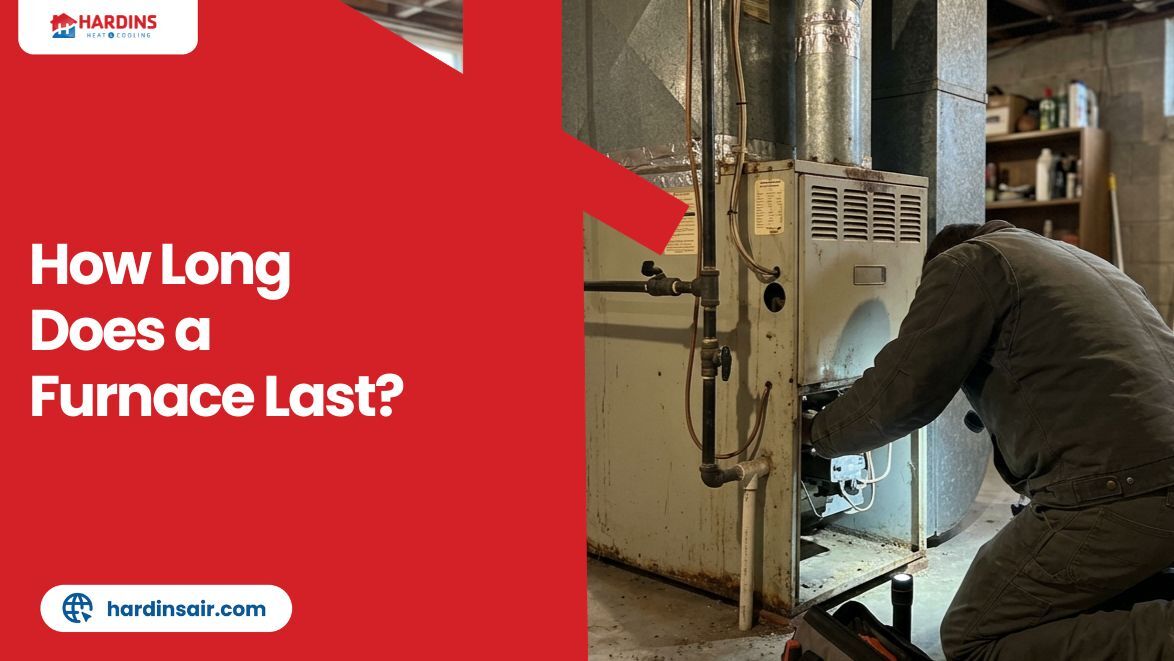
Most home furnaces last around 15 to 20 years, although some can operate for 25 years or longer. The actual average furnace lifespan depends on the furnace type, installation quality, maintenance, operating conditions and frequency of use. Regular inspections and filter changes can help maintain reliable operation and reduce the risk of unexpected HVAC breakdowns.
Key Takeaways
|
What Is the Average Lifespan of a Home Furnace?
A typical home furnace lasts about 15 to 20 years.
The International Association of Certified Home Inspectors (InterNACHI) puts furnaces at 15 to 25 years with regular maintenance and normal wear. A USDA Forest Service reference table lists gas- and oil-fired furnaces at 18 years.
In practice, most furnaces get replaced somewhere in that window once repairs start piling up. Fuel type and design shift the range a little. This table shows the usual lifespan for each common type and the part that tends to limit it:
| Furnace type | Typical lifespan | Main wear point |
| Standard gas | 15 to 20 years | Heat exchanger |
| High-efficiency gas | 15 to 20 years | Condensate system |
| Electric | Often 20 to 30 years | Heating elements, blower |
| Oil | 15 to 25 years | Burner, soot buildup |
Electric furnaces use resistance heating rather than fuel combustion. They do not have burners or combustion-related exhaust components, but their heating elements, electrical connections and blower motors can still wear out over time.
Propane furnaces fall in the same range as natural gas models, since they use the same burner and heat exchanger design.
High-efficiency gas furnaces run as long as standard models when they’re cared for. Their acidic condensate does need a clear drain to keep the secondary heat exchanger from corroding.
Which Parts Wear Out First?
A furnace rarely fails all at once. Smaller parts wear out over the years. Most of them can be replaced without changing the whole unit. These are the usual ones:
- Heat exchanger. InterNACHI lists its life at 10 to 15 years. Repeated heating and cooling can contribute to metal fatigue over time. Overheating and corrosion can also damage the heat exchanger and lead to cracks.
- Hot surface igniter. This component can crack or wear out over time, preventing the furnace from igniting properly.
- Flame sensor. Dirt and residue can interfere with its ability to detect a flame, causing the furnace to shut down.
- Inducer and blower motors as their bearings wear down
- Control board. Power surges and moisture can shorten its life.
Professional furnace repair can address worn components, and replacing an igniter or motor can help keep a furnace running for years. A cracked heat exchanger is a serious issue because it can allow combustion gases to enter the furnace’s air stream. Depending on the equipment, warranty coverage and repair costs, replacing the furnace may be more practical than replacing the heat exchanger.
What Affects How Long a Furnace Lasts?
Two furnaces of the same model can wear out years apart. These factors explain most of the difference:
- Maintenance and filters: A clogged filter makes the furnace overheat and cycle on its safety switches. ENERGY STAR recommends checking the filter every month and changing it at least every three months.
- Sizing: An oversized furnace heats the house too fast and short cycles. An undersized one runs almost nonstop on cold days. Both add wear to motors, igniters and the heat exchanger.
- Airflow: Blocked return grilles and closed supply vents can restrict airflow, forcing the furnace to work under conditions that may contribute to overheating and additional component wear.
- Usage: A furnace in a home kept at 74°F all winter logs far more hours than one in a home set to 68°F. Longer, colder winters add hours too.
InterNACHI notes that furnace life varies with usage, weather, installation, maintenance and the quality of materials. Of those, maintenance is the one you control most directly.
Incorrect sizing can contribute to short cycling or extended run times. However, uneven heating and frequent cycling can also result from airflow restrictions, thermostat problems or ductwork issues.
How to Find Out How Old Your Furnace Is
The age of your furnace is the first number to know before planning anything. You can usually find it in a few minutes.
Start with the data plate. It’s a metal or foil label inside the burner or blower compartment door that lists the model and serial number.
Some manufacturers include the production year and week in their serial numbers, while others use different coding systems. The manufacturer’s website or customer service line can decode it for you. Some brands print the manufacture date directly on the label.
Other records can help too. Check for an installation sticker on the cabinet, old invoices or the inspection report from when you bought the home. Once you know the install year, write it on a piece of tape on the cabinet for quick reference.
Signs Your Furnace Is Near the End of Its Life
Age alone doesn’t mean a furnace has to go. Age combined with a few of these signs usually means it’s time to start planning:
- It’s more than 15 years old. An ENERGY STAR heating and cooling guide suggests considering replacement at that point. However, a well-maintained furnace may continue operating beyond this age.
- Heating bills keep climbing even though your habits haven’t changed.
- It needs a repair almost every season.
- Some rooms stay cold while others overheat.
- The blower runs longer than it used to without the house reaching the set temperature.
- A yellow burner flame or soot around the furnace.
- Banging, rattling or loud humming when the system starts.
- The U.S. Department of Energy (DOE) notes that older natural-draft systems with a standing pilot run at only 56% to 70% Annual Fuel Utilization Efficiency (AFUE). Today’s high-efficiency models reach 90% or more.
- A technician finds a crack in the heat exchanger.
If a carbon monoxide (CO) alarm sounds or you smell gas, leave the house right away. Call the gas utility or 911 from outside before calling for furnace service.
Replacing a furnace before it fails gives you time to compare options, plan a professional furnace installation, size the new unit properly and schedule the work on a mild day.
How to Make Your Furnace Last Longer
Small habits add up over a furnace’s life. These steps help a newer unit reach the high end of its range:
- Check the filter monthly during winter and replace it when it looks dirty.
- Book a professional HVAC tune-up once a year, ideally before the heating season starts, to keep your furnace operating properly.
- Keep supply vents and return grilles open and clear of furniture.
- Keep boxes and stored items away from the cabinet so the burners get enough combustion air.
- Fix small problems, like a noisy motor or a weak igniter, before they strain other parts.
- Consider a maintenance plan that keeps yearly visits on schedule.
During an annual inspection, a technician can check the heat exchanger, burners, ignition system, electrical connections and safety controls. This helps identify developing problems before the heating season gets underway.
Conclusion
Most furnaces last 15 to 20 years. Good maintenance can stretch that closer to 25. The heat exchanger usually decides how long a unit lasts, since a crack there often ends its service life.
Write down your furnace’s installation year and keep an eye on repair frequency and heating bills. That way, you can plan a replacement before the first cold snap forces the decision.
If your furnace is getting older or acting up, reach out to Hardin’s Heating & Cooling. We’ll check its condition, repair what can be fixed and talk through a new installation if it’s time. Our maintenance plan can also help a newer furnace reach the long end of its lifespan.