

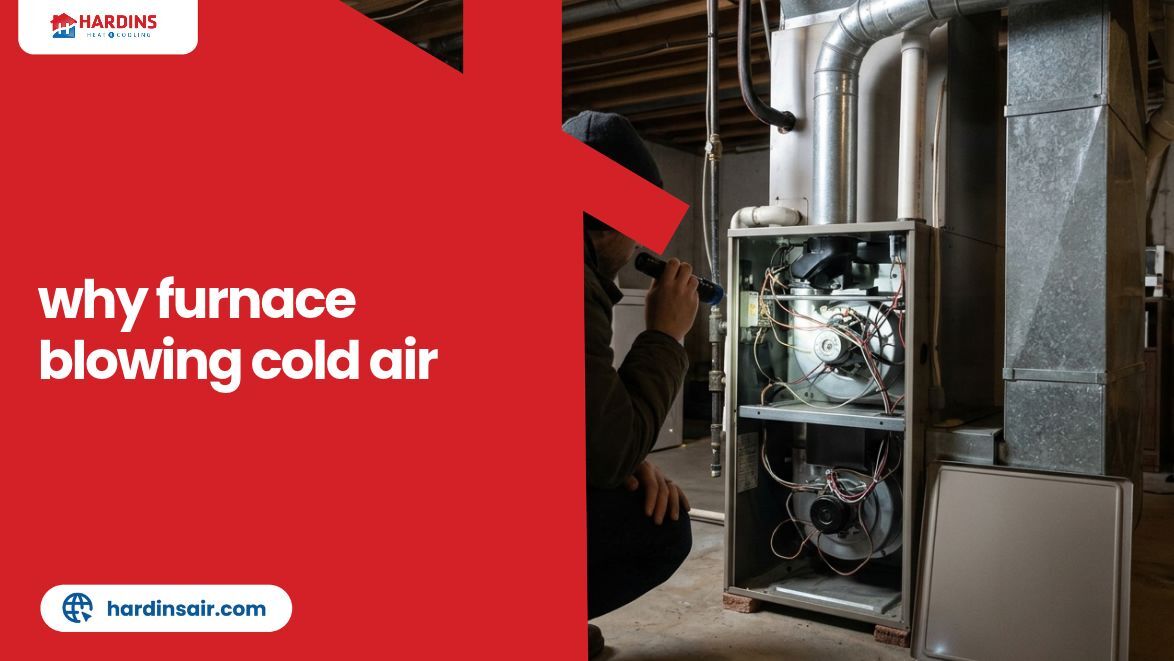
Cold air coming from the vents on a winter morning usually means the furnace blower is running while the burners aren’t lit. The most common reason is a thermostat fan set to “On” instead of “Auto.” A clogged filter can also overheat the furnace and trip the high-limit switch, shutting the flame off while the fan keeps going. Dirty flame sensors, igniter or gas supply problems and leaky ducts in an attic or crawl space are the other usual suspects behind a furnace not blowing hot air.
Key Takeaways
|
The repair prices mentioned are broad national estimates meant to help you plan. The final cost depends on the part, the furnace model and the work involved. A professional team can confirm an exact price after inspecting your system.
What Makes a Furnace Push Cold Air Through the Vents?
A gas furnace controls its burners and its blower separately. The control board lights the burners first, waits for the heat exchanger to warm up and then starts the blower. Cold vents mean the blower is running while the flame is off or never lit.
The gap can come from a setting, a safety switch, a dirty part or a problem outside the furnace itself. Each cause below shows up in a slightly different way.
Thermostat Fan Set to “On” or the Wrong Mode
With the fan set to “On,” the blower runs nonstop. Between heating cycles, it pushes room-temperature air through the ducts. That air feels cold against your skin. Switching the fan to “Auto” lets it run only while the burners are lit.
Also check that the thermostat is set to “Heat,” not “Cool” or “Off,” and that the set temperature sits a few degrees above the room temperature. If you have a battery-powered thermostat, check for a low-battery warning. Weak batteries can interrupt thermostat operation or communication with the heating system.
The Furnace Is Still Warming Up or Cooling Down
Some cool air is part of a normal cycle. Most gas furnaces wait until the burners have warmed the heat exchanger before starting the circulating blower. This delay helps prevent cold air from being pushed into the rooms at the beginning of a heating cycle. When the blower starts, air sitting in cold ducts may briefly feel cool.
The blower also keeps running for a short time after the burners shut off to pull the leftover heat out of the furnace. That last bit of air cools quickly. If the air stays cold through the whole cycle, something else is wrong.
A Clogged Air Filter Tripping the High-Limit Switch
A dirty filter chokes the airflow across the heat exchanger. Heat builds up inside the cabinet until the high-limit switch shuts the burners off to prevent damage.
The blower keeps running to cool the furnace. Until the burners relight, the vents blow cool air.
You may notice the heat cycling on and off every few minutes. ENERGY STAR recommends checking the filter every month and changing it at least every three months.
A Dirty or Failing Flame Sensor
The flame sensor is a thin metal rod that sits in the burner flame. It confirms to the control board that gas is burning. Over time, a layer of carbon builds up on the rod and blocks its signal.
When that happens, the burners light for a few seconds and then shut off as a safety step.
The furnace may attempt ignition again before entering a safety lockout. Whether the circulating blower continues running depends on the furnace’s control sequence.
Igniter or Pilot Light Problems
Furnaces built since the 1990s usually light their burners with a hot surface igniter. This small ceramic part glows orange before the gas valve opens. Igniters are brittle and wear out with use. A cracked one can’t light the gas at all.
Older furnaces use a standing pilot light instead. A draft, a dirty pilot tube or a weak thermocouple can put the pilot out. The burners then have nothing to light them.
An Interrupted Gas Supply
A burner can’t light without gas. A shutoff valve bumped to the closed position after other work, a problem with the utility’s service or an empty propane tank will all stop the flame. The blower may still run on its normal schedule.
Checking another gas appliance, such as the stove or water heater, quickly shows whether the problem is the furnace or the gas supply.
A Blocked Condensate Drain Tripping the Pressure Switch
High-efficiency furnaces drain water from their exhaust through a condensate trap and line. When that drain clogs, water backs up toward the inducer and the pressure switch can’t confirm a safe draft.
The furnace then refuses to light or shuts the burners off mid-cycle. Gurgling sounds or water near the furnace usually point to this cause.
Leaky or Disconnected Ductwork
Sometimes the furnace heats normally and the warm air never reaches the room. According to ENERGY STAR, about 20 to 30 percent of the air moving through a typical duct system is lost to leaks, holes and poorly connected ducts.
Ducts running through an attic, garage or crawl space lose the most heat. A section that has come apart can also pull cold air into the system. Rooms at the end of long duct runs often feel this first.
A Faulty Control Board or Fan Limit Switch
The control board runs the whole startup sequence: the inducer, the igniter, the gas valve and then the blower. A failing board can start the blower without ever lighting the burners.
A bad fan limit switch can do the same thing and leave the fan running nonstop. Many furnaces show a flashing error code through a small window on the front panel. That code helps a technician narrow down the failed part.
A Heat Pump That Feels Cooler Than a Furnace
Homes with a heat pump or a dual-fuel system sometimes mistake normal operation for a problem. Heat pump air is warm but not as hot as furnace air.
The Oak Ridge National Laboratory (ORNL) describes this “cold blow” feeling as supply air that is usually cooler than skin temperature.
In cold, damp weather, the heat pump also runs a defrost cycle to melt ice off the outdoor coil. The air indoors can feel cool for a few minutes until defrost ends.
Is a Furnace Blowing Cold Air Dangerous?
Cold air on its own is usually a comfort problem. Some of the causes behind it still need quick attention, especially when the furnace keeps shutting down.
Watch for these warning signs:
- The furnace trips its limit switch again and again. Repeated overheating stresses the heat exchanger and can lead to cracks over time.
- A smell of rotten eggs near the furnace or gas appliances.
- Soot around the burners, unusual flame appearance or signs of poor combustion.
- A carbon monoxide (CO) alarm that sounds while the furnace is running.
- A burning or electrical smell coming from the furnace cabinet.
- Pipes near outside walls getting cold enough to freeze during a long outage.
Utilities add an odorant to natural gas that smells like rotten eggs or sulfur. It makes leaks easy to notice. If you smell it, don’t flip switches or try to relight anything. Leave the house and call your gas utility or 911 from a safe location outside.
Carbon monoxide is the other serious risk with any gas furnace. The Consumer Product Safety Commission (CPSC) recommends CO alarms on each level of the home and outside sleeping areas. Test CO alarms regularly according to the manufacturer’s instructions. Replace batteries and the alarm itself according to the recommended service life and replacement schedule.
Repeated resets can also make things worse. A furnace that locks out is protecting itself. Forcing it back on several times can hide the real cause. After one reset, let a technician find out why the system keeps shutting down.
A long stretch without heat in freezing weather also puts plumbing at risk. If the repair can’t happen the same day, open the cabinet doors under sinks on outside walls and let faucets drip slightly.
How to Fix a Furnace That’s Blowing Cold Air
A few simple checks solve many cold-air calls without any tools. Work through them in order. Stop at any step where the fix needs a technician.
1. Check the Thermostat Settings
Set the system to “Heat” and the fan to “Auto.” Raise the temperature 3 to 5 degrees above the current room reading. If the screen is blank or dim, replace the batteries and give the furnace a few minutes to respond.
Smart thermostats sometimes switch to an eco mode or a new schedule after a software update. Check the app as well as the screen.
2. Replace the Air Filter
Slide the filter out and inspect it for visible dust buildup. Check the manufacturer’s replacement recommendations and install a new filter if the existing one is dirty or has reached the end of its service life. Make sure the replacement matches the required size and airflow direction.
3. Check the Breaker and Furnace Switch
Look for a tripped breaker labeled “furnace” or “HVAC” in the electrical panel. The furnace also has its own power switch near the unit. It looks like a regular light switch and sometimes gets turned off by mistake.
If the breaker trips again right after you reset it, leave it off. A repeat trip points to an electrical fault that needs a technician.
4. Confirm the Gas Supply Is On
If there is no suspected gas leak, check whether other gas appliances in the home are operating normally. If they are also without gas, contact your gas utility or propane supplier. Do not attempt to adjust the furnace’s gas valve or work on gas connections yourself.
5. Read the Status Light Code
Most furnaces have a small window on the front panel with a blinking LED. Count the flashes and compare them with the chart on the inside of the panel door. The code can point to a flame sensor, pressure switch or limit switch problem.
Write the code down before resetting anything. A reset can clear it before the technician gets a chance to see it.
6. Reset Once, Then Call a Technician
If the furnace has stopped operating, check the thermostat, filter and accessible status light first. Follow the manufacturer’s instructions for any permitted reset procedure. Do not repeatedly restart a furnace that keeps shutting down or shows signs of a combustion, gas or electrical problem. Leave it off and arrange a professional inspection. Share any displayed error codes and the troubleshooting steps you have already completed.
How Much Does It Cost to Fix a Furnace Blowing Cold Air?
Most cold-air repairs involve small parts and take a single visit. The price climbs when the control board or ductwork is involved.
These general ranges cover the most common repairs:
| Repair | Typical cost |
| Flame sensor cleaning | $80 to $250 |
| Flame sensor replacement | $100 to $300 |
| Hot surface igniter replacement | $150 to $450 |
| Limit or pressure switch replacement | $150 to $450 |
| Control board replacement | $400 to $900 or more |
| Duct sealing and repair | $500 to $2,000 or more |
Most HVAC companies also charge a diagnostic fee to track down the failed part. Ask whether that fee is credited toward the repair if you approve the work.
A few factors move the final bill up or down:
- Brand and model. Parts for some premium or older furnaces cost more or take longer to order.
- Whether one part failed or two, since a bad limit switch often comes with a clogged filter or weak blower
- Access to the furnace in an attic, tight closet or crawl space
- How much duct runs through unheated space and how easy it is to reach
- A second visit when a replacement part has to be ordered
Duct repairs cost more up front but can pay back over time. ENERGY STAR notes that leaky ducts can reduce heating and cooling efficiency by as much as 20 percent.
The furnace’s age also shapes the decision. An ENERGY STAR heating and cooling guide suggests considering replacement once a furnace passes 15 years old. Rooms that stay too hot or too cold are another sign it lists.
Repair history matters as much as age. If a 17-year-old unit needs a $700 control board after two other repairs this season, compare that cost with the price of a new, more efficient furnace before deciding.
A newer furnace with a single failed part, such as an igniter or flame sensor, is usually worth fixing.
How to Keep Your Furnace Blowing Warm Air
Most of the causes above build up slowly. A short routine catches them before the first cold night of the season.
- Check the filter every month in winter. Change it when it looks gray. ENERGY STAR recommends a new filter at least every three months.
- Schedule a tune-up each fall so a technician can clean the flame sensor, test the igniter and check the limit and pressure switches.
- Keep supply vents and return grilles open and clear of furniture, rugs and curtains.
- Seal duct joints with mastic or metal tape instead of cloth duct tape. Insulate any ducts in the attic or crawl space.
- Flush the condensate line on a high-efficiency furnace during each service visit.
- Test CO alarms monthly and replace their batteries once a year. Thermostat batteries are worth changing every fall too.
- Keep storage away from the furnace so the burners get enough combustion air.
- Clear snow, leaves and debris away from the white PVC intake and exhaust pipes outside a high-efficiency furnace.
Timing matters for the tune-up. ENERGY STAR suggests checking the heating system in fall, before contractors get busy with winter repair calls.
Pay attention to small changes too. A furnace that takes longer to warm the house, cycles more often or starts making new noises is often showing an early sign of one of these problems.
Conclusion
A furnace blows cold air when its blower runs without a flame. Thermostat settings, clogged filters, dirty flame sensors, igniter or gas supply problems and leaky ducts cause most cases. Startup delays and heat pump defrost cycles are normal and fade on their own.
A clean filter and a fall tune-up prevent many of these problems. Before calling for service, note whether the cold air comes at startup, partway through the cycle or after the burners shut off. Write down any blinking error code too.
Still feeling cold air after checking the thermostat and filter? Reach out to Hardin’s Heating & Cooling. We’ll track down why your furnace is running without heat, explain the repair in plain terms and get warm air moving through your home again.