

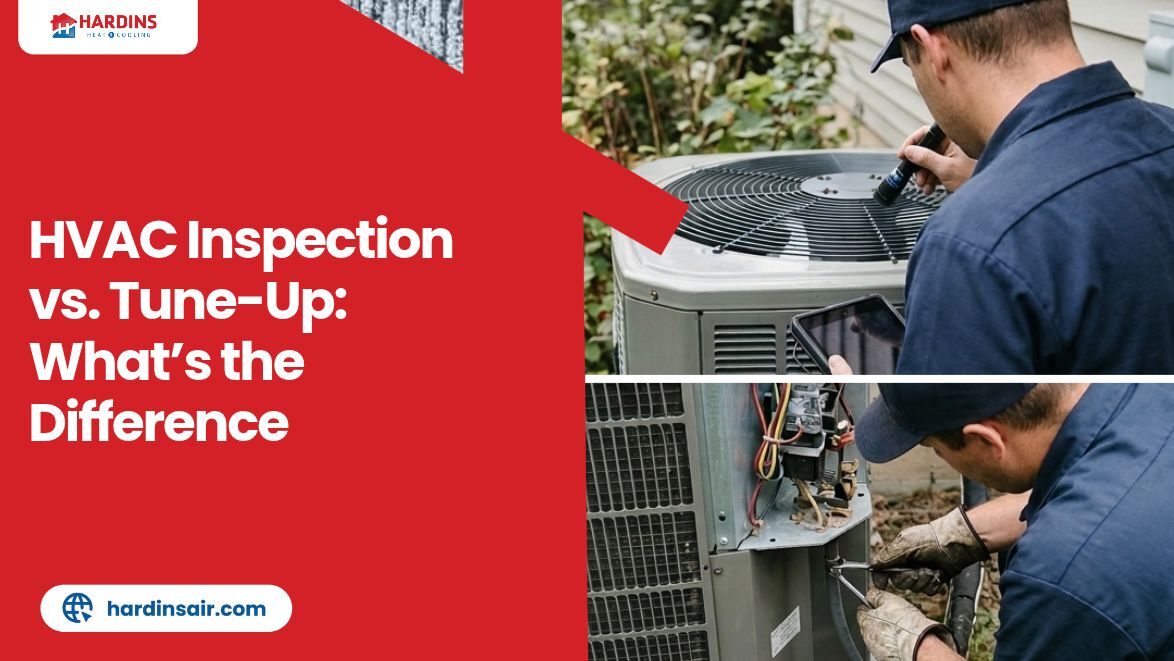
Heating, ventilation and air conditioning (HVAC) companies often use “inspection” and “tune-up” as if they mean the same visit. That makes it hard to know what you’re paying for. An inspection is a diagnostic check. The technician tests the system, looks for worn or failing parts and explains what needs attention.
A tune-up includes that same inspection, then adds hands-on work like cleaning coils, clearing the drain line and replacing the filter. Learn more about what happens during an HVAC tune-up and what the service typically includes. Knowing the difference makes it easier to book the right HVAC inspection or tune-up for your home.
Key Takeaways
|
These prices are general national estimates, not a quote. Visit length, system type and any parts used will change the final price. Contact our team for a quote.
How Does an HVAC Inspection Compare With a Tune-Up?
HVAC inspections and tune-ups often overlap. An inspection focuses on evaluating system condition and identifying potential problems. A tune-up generally includes these checks along with preventive maintenance tasks agreed upon in the service package. Some companies combine both services into one appointment, while others offer them separately.
Here’s What an HVAC Inspection Covers
During an HVAC inspection, the technician evaluates the system’s condition and checks whether its major components operate properly. Depending on the service agreement, the visit may also include basic maintenance or minor adjustments. More extensive cleaning and repairs are generally discussed separately.
A typical inspection looks at:
- Thermostat operation and system controls
- The air filter and airflow through the system
- Electrical components and connections
- Indoor and outdoor coils for dirt or buildup
- Refrigerant-related conditions on air conditioners and heat pumps
- Condensate drainage, the blower and the fan
- Burners, safety controls, the heat exchanger and exhaust on a gas furnace
On a heat pump, the technician may also check heating and cooling operation, thermostat response, outdoor fan performance and defrost controls where applicable.
The technician should explain the findings and identify any recommended maintenance or repairs. If additional work is needed, the homeowner should receive an explanation of the proposed work and its cost before authorizing it.
What a Tune-Up Adds
A tune-up starts with the same checks and then fixes the small problems the inspection turns up. On an air conditioner, a tune-up may include cleaning accessible condenser coils, inspecting the evaporator coil and checking refrigerant-related operating conditions. If the refrigerant charge is incorrect, the technician should investigate the cause before making adjustments.
The technician also clears the drain line, cleans or replaces the filter and calibrates the thermostat. Dirty coils can reduce heat transfer and make the system work harder. A restricted condensate drain can cause water damage or trigger a safety shutdown in some systems. Addressing these problems during routine maintenance can help prevent further operating issues.
Furnace tune-ups focus on clean burners and working safety controls, while damaged or malfunctioning components may require professional furnace repair. The ENERGY STAR maintenance checklist outlines different maintenance tasks for heating and cooling equipment. Depending on the system, these can include:
- Tightening electrical connections and measuring motor voltage and current
- Lubricating moving parts to cut motor friction
- Cleaning and adjusting blower components for proper airflow
- Checking gas connections, gas pressure and burner combustion on furnaces
The table below shows how the two visits compare side by side:
| Feature | Inspection | Tune-Up |
| Main goal | Find problems | Find and prevent problems |
| Hands-on work | None or minimal | Cleaning and adjustments |
| Filter care | Checked only | Cleaned or replaced |
| Typical cost | $75 to $200 | $75 to $200 per system |
| Best for | A system acting up | Yearly routine care |
An inspection-only visit makes sense when you need answers before paying for a repair. For a system that works and is simply due for service, a tune-up covers the inspection and the cleaning in one appointment for about the same cost.
Which One Does Your System Need?
The right visit depends on how the system is behaving right now. A few signs point clearly in one direction or the other.
Book an inspection when:
- The system makes grinding, banging or squealing noises.
- The system repeatedly turns on and off over short intervals without maintaining the desired indoor temperature.
- Some rooms get weak airflow while others feel fine.
- Ice keeps building up on a heat pump’s outdoor unit.
- The equipment sat unused for a season or longer.
- You just moved into a home and don’t know the system’s history.
In these situations, the inspection gives the technician a chance to find the cause before anyone starts replacing parts.
If you smell gas or a carbon monoxide (CO) alarm sounds, leave the property immediately. Do not operate electrical switches or attempt to locate the problem. Call 911 or your gas utility from a safe location outside. Do not reenter until emergency responders say it is safe.
A tune-up is the better fit in other cases:
- It’s due for routine maintenance. If the system is operating normally but hasn’t received professional maintenance within the recommended service interval, schedule a tune-up.
- Summer or winter is a few weeks away and the system is about to handle its heaviest workload.
- Your equipment warranty asks for proof of regular maintenance. Check the paperwork, since some manufacturers include this condition.
- Energy bills crept up over the last season with no change in how you use the system.
For a system that runs normally, the yearly tune-up is the visit to book. It costs about the same as an inspection and covers the cleaning that keeps small problems from turning into repairs.
What Does Each Service Cost?
Prices for both visits fall in a similar range. An inspection-only visit usually runs $75 to $200. A tune-up costs about the same per system. A combined heating and cooling visit often lands between $150 and $500.
Prices climb with the number of systems, the type of equipment and the time the work takes. Homes with multiple HVAC systems or more complex equipment configurations may require additional service time. The final price depends on the number of systems, their condition and the maintenance tasks involved.
An inspection that turns up a problem usually leads to a separate repair quote. Ask whether the inspection fee is credited toward that repair.
Maintenance plans bundle these visits into a yearly membership. Many also add perks such as priority scheduling or discounts on repairs.
Because companies name their services differently, the task list matters more than the label. Ask these questions before you book:
- Which tasks are included? Which ones cost extra?
- Is filter replacement part of the visit?
- About how long will the visit take for your equipment?
- Will the technician check refrigerant on the AC or heat pump?
- Does the visit cover the minimum tasks in ACCA 4 QM, the national maintenance standard from the Air Conditioning Contractors of America (ACCA)?
- Will someone walk you through the findings before any repair starts?
A tune-up price does not necessarily include repairs or replacement parts. If the technician identifies a problem, ask for a separate estimate that explains the required work and any additional charges. Approve the repair before the technician proceeds.
How Often Should You Schedule One?
Most homes need a professional visit at least once a year. The exact schedule depends on the equipment:
- Air conditioner: once a year, ideally before the cooling season starts.
- Furnace: once a year, before the heating season. The Consumer Product Safety Commission (CPSC) recommends having heating systems, chimneys and vents inspected and serviced every year.
- Heat pump: twice a year, once before summer and once before winter, since it heats and cools.
- After a major repair or a long vacancy: schedule an extra inspection to confirm everything runs correctly before the system carries a full load.
Skipping a year rarely causes an instant breakdown. It does let dirt, worn parts and slow drains build up quietly. That usually shows up later as higher bills or a mid-season failure.
Timing also matters. ENERGY STAR advises checking the cooling system in spring and the heating system in fall, before contractors get busy with peak-season repair calls.
Conclusion
An HVAC inspection evaluates the system’s condition, checks its operation and identifies problems that may need attention. A tune-up generally combines these checks with preventive maintenance tasks such as cleaning, adjustments and component checks. The exact services depend on the company’s maintenance package.
For most homes, a yearly tune-up is the better value. Heat pumps benefit from two visits a year. Whatever a company calls its service, compare the task list before booking.
Let us take the guesswork out of your next service visit. At Hardin’s Heating & Cooling, we handle AC and heat pump maintenance along with furnace service.