

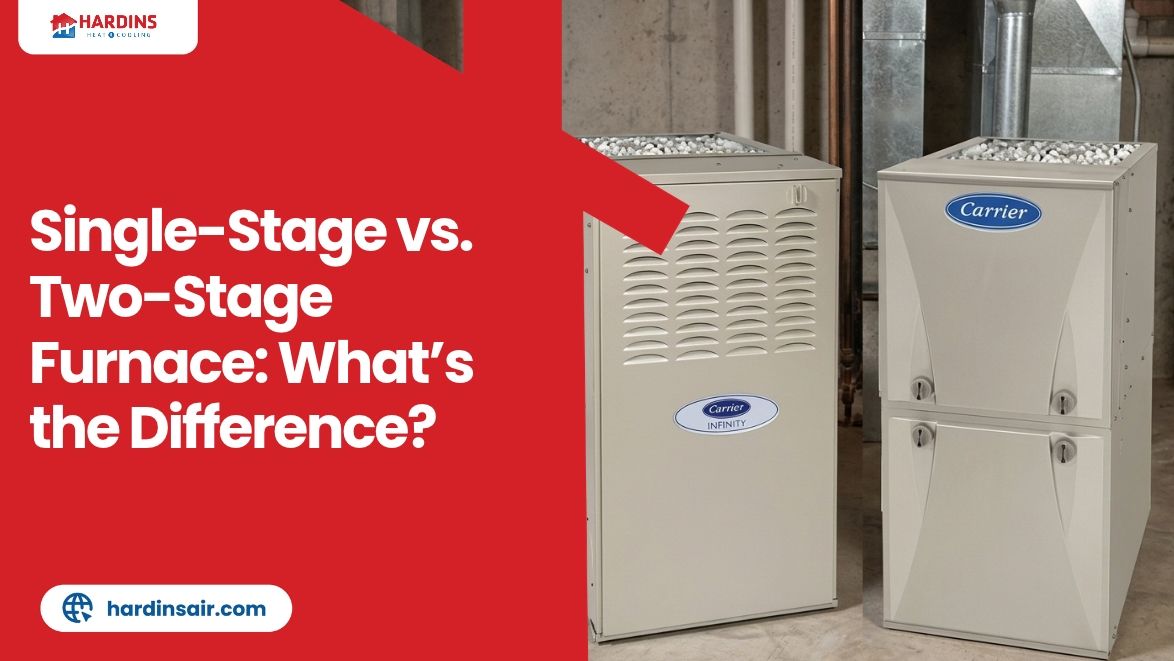
When shopping for a new heater, you will notice furnaces come in two main types, single stage and two stage. The main difference comes down to how the gas valve regulates heat output. A single stage model operates at 100 percent maximum capacity whenever it turns on. A two stage model runs at a reduced capacity on mild days and ramps up to full blast only during severe cold snaps. Choosing between them depends on whether you prefer lower upfront equipment costs or potential monthly energy savings, more consistent indoor temperatures and quieter overall performance all winter long.
Key Takeaways
- Adopting a smart two stage furnace energy efficiency strategy can help manage monthly heating bills while keeping room temperatures far more consistent.
- The main difference between single stage and two stage furnaces is that single stage units run at full power only, while two stage models adjust output down to a reduced capacity on mild days.
- Single stage systems cost less on installation day but they turn on and off more often and can create slight temperature swings in your home.
- Two stage equipment runs longer, gentler heating cycles that often burn less fuel, cut down on blower motor noise and improve indoor air filtering.
Understanding Single Stage Furnaces
Single stage furnaces are about as traditional as home heating gets. Whenever your wall thermostat senses a dip in room temperature, it sends a quick signal down to the unit. The gas valve opens all the way up, the burners ignite and the fan immediately pushes warm air at full blast. It does not matter whether outdoor temperatures sit at a mild 50 degrees or plummet down into freezing single digits. The equipment always runs at maximum power until your hallway thermostat hits the exact number you set, then it shuts off completely.
Because these units only know how to run at top speed, they tend to cycle on and off quite a bit throughout the day. You might notice a living space feels warm right after the air stops blowing but slowly chills down before the burners ignite again. Still, homeowners pick single stage units all the time. They cost significantly less on installation day and their straightforward mechanical setup means local technicians can service them quickly without needing specialized digital diagnostics.
They also fit into almost any standard house setup without fuss. If you are replacing an older unit and plan on moving in a couple of years, a fresh single stage unit is a budget friendly way to keep your living space warm without overspending. Standard replacement parts are readily available, which helps keep routine maintenance simple throughout the lifespan of the equipment.
For households with basic heating needs or homes located in areas with shorter winter seasons, this equipment provides dependable warmth. It gets the job done without extra electronic components that could require specialized care later on.
Two Stage Furnace Explained
Two stage furnaces take a much gentler approach to keeping your home comfortable. Instead of blasting hot air at maximum power every time, the gas valve inside operates at two distinct output settings depending on how cold it gets outside. On a typical autumn evening or mild winter afternoon, the system fires up at a lower stage that uses a reduced capacity.
Running on this lower stage lets the system operate for longer, quiet stretches of time. Warm air moves through your rooms continuously instead of coming in sudden hot bursts, which can significantly reduce those annoying chilly spots in back bedrooms. When a severe cold front rolls into your area, the system senses the extra demand and automatically ramps up to high gear. Once your living room warms back up, the unit drops back down to low speed on its own.
That continuous lower airflow also does wonders for your indoor environment. Since air keeps moving through your return vents, your furnace filter catches way more dust and floating debris throughout the day. Plus, running at lower speeds cuts down on daily blower motor noise and reduces everyday wear on internal parts, helping your heating investment last longer over time.
Longer heating cycles give your living space time to balance air pressure across hallways. Distant rooms that usually stay chilly are more likely to receive steady warm air, helping create a more uniform environment for your whole family.
Comparing Single Stage and Two Stage Furnaces
Comparing these two heating options side by side makes it easy to see how they impact your home environment, monthly bills and overall project budget:
| Feature | Single Stage Furnace | Two Stage Furnace |
| Gas Valve Operation | Runs at 100% full capacity only | Runs at a reduced capacity or 100% high power |
| Upfront Equipment Cost | Lower initial purchase price | Higher initial investment |
| Indoor Comfort | Occasional temperature swings and chilly spots | Often delivers more consistent, even warmth |
| Operating Noise | Louder blasts of air when the system kicks on | Very quiet operation during low stage runs |
| Monthly Power Bills | Higher gas usage due to constant full speed runs | Potential for lower fuel consumption overall |
| Air Filtration | Filters air only during short, intense cycles | Filters indoor air longer due to extended runs |
Choosing between these two options comes down to what matters most for your property. If your primary goal is keeping immediate equipment costs low, a single stage unit provides straightforward warmth. However, if you plan to stay in your home for years to come, a two stage system delivers long term comfort benefits that can make a noticeable difference.
Multi level homes especially benefit from two stage systems because extended low speed cycles give warm air enough time to rise upstairs naturally. This gradual air circulation can help minimize room temperature gaps between different floors, making your entire house far more enjoyable during long winter months.
Conclusion
Choosing the best heater for your house comes down to balancing your upfront project budget against your long term comfort needs. While a basic single stage unit saves you money on installation day, adopting a two stage furnace energy efficiency strategy provides far quieter operation, can reduce chilly room drafts and offers the potential for lower monthly fuel costs over time under suitable conditions. If you need help choosing the right system size or want an expert recommendation for your living space, reach out to Hardin’s Heating & Cooling today to schedule a consultation with local heating experts.
Frequently Asked Questions
Is a two stage furnace really worth the extra money?
For many homeowners, the potential for lower fuel bills, quieter performance and more even indoor temperatures help offset the higher upfront purchase price over the life of the system.
Can a two stage furnace work with my current ductwork?
In almost all cases, yes, though a qualified HVAC technician should inspect your existing air ducts to make sure they can handle the airflow rates properly.
Does a two stage furnace run all day long?
It may run for longer stretches of time on its low setting during cold weather but this continuous low speed operation typically uses energy more efficiently than a single stage unit turning on and off at full blast.