

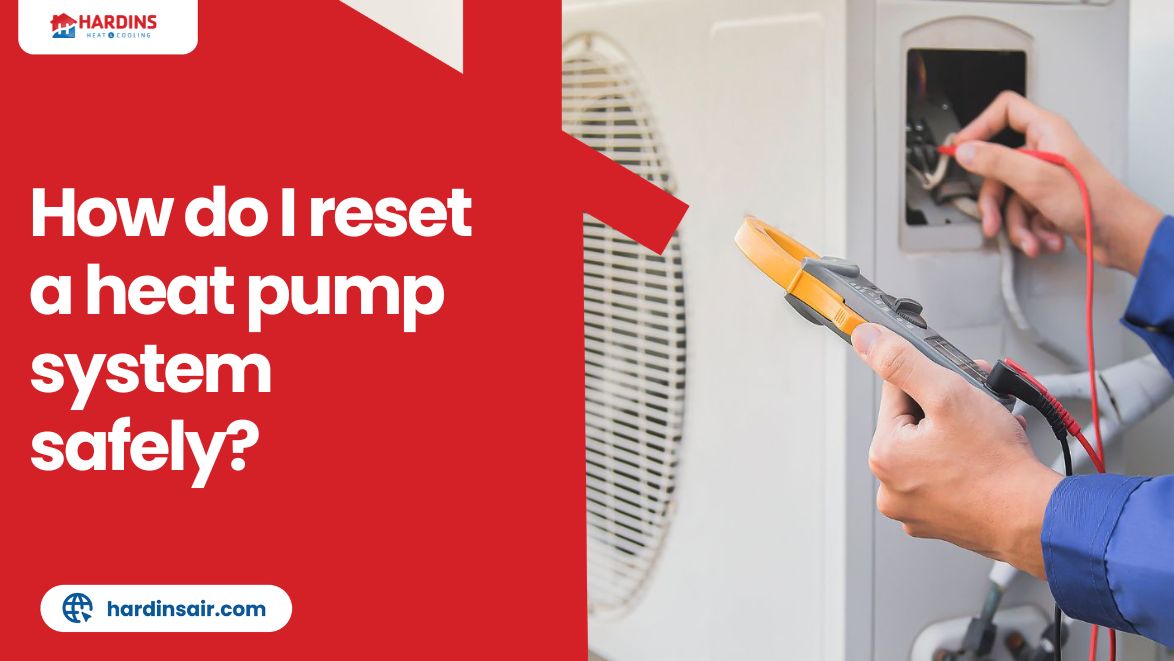
Your heat pump stops working during extreme Oklahoma weather, leaving you uncomfortable and frustrated. The system won’t start, makes strange noises or displays confusing error codes on your thermostat. You might think resetting it will fix everything quickly at home. So what steps should you follow to safely reset a heat pump system without causing damage?
| Quick Answer
Turn off the thermostat, shut off power at the breaker, wait atleast 30 seconds, restore power, restart the thermostat, then test functions. Safety first means checking for electrical hazards, clearing debris and reviewing manufacturer instructions carefully. Reset works for minor glitches but won’t fix major mechanical failures inside your system. If the problem persists after reset, you need professional repair service immediately. Never reset repeatedly without finding the root cause or you’ll cause more expensive damage later. |
Steps to Reset a Heat Pump System Safely
Let’s walk through each step carefully and methodically.
1. Turn Off the Thermostat
Switch your thermostat to the off position before touching any electrical components around your home. This prevents the system from starting while you work on it safely. Don’t just lower the temperature setting actually turn it off completely instead. Wait a few seconds to ensure the signal reaches the outdoor unit properly.
Your thermostat is the command center for your entire HVAC system. Turning it off sends a clear stop signal before you cut power.
2. Shut Off Power at the Breaker
Locate your home’s electrical panel and find the breaker labeled for your heat pump system clearly. Flip it to the off position completely and firmly. This cuts all power to both indoor and outdoor units safely. If you can’t find the right breaker, turn off the main power but this affects your whole house temporarily until you restore it.
Electrical panels can be confusing. Look for labels like “HVAC,” “Heat Pump,” or “AC.”
3. Wait for the System to Fully Power Down
Wait at least 30 seconds to let capacitors discharge completely inside your system. This is crucial because stored energy can still shock you even after power cuts off. Some systems need up to 5 minutes for a full reset cycle. Use this time to inspect the outdoor unit for visible problems or debris blocking airflow.
Capacitors store electricity like batteries. They need time to release that energy safely.
4. Restore Power to the Heat Pump
Flip the breaker back to the on position firmly and completely. You should hear the outdoor fan start spinning within seconds of restoration. Check that the disconnect box near the outdoor unit is closed properly too. If the breaker trips immediately, stop and call for professional heat pump repair near me instead of continuing to reset.
Immediate tripping means serious electrical problems. Don’t keep flipping the breaker.
5. Restart the Thermostat
Return to your thermostat and turn it back on carefully. Set it to heat or cool mode depending on your current seasonal needs. Adjust the temperature to a setting that will trigger the system to start. Digital thermostats might need a few seconds to reconnect to your system. Watch for error codes or blank displays that indicate ongoing problems.
Your thermostat needs power to communicate with the outdoor unit properly.
6. Test Heating and Cooling Functions
Let the system run for 15-20 minutes in both modes if weather allows testing. Check that air from vents feels warm for heating and cool for cooling. Listen for unusual noises like grinding, squealing or clicking from any component. Verify the outdoor unit runs smoothly without strange vibrations or shaking. If something seems off, shut it down immediately.
Trust your ears and nose. Strange sounds or burning smells mean problems exist.
Alternative Ways to Reset a Heat Pump
Not all heat pumps need the breaker method for resetting properly. Some have dedicated reset buttons or smart thermostat controls that simplify the process significantly. Understanding these alternatives saves time and effort when dealing with common system glitches effectively.
- A dedicated reset button on the outdoor unit works for minor electronic lockouts quickly.
- Smart thermostats offer software reset options through mobile apps easily.
- Thermostat reset clears programming errors without touching electrical components at all.
- Some systems reset automatically after power returns from an outage naturally.
- Check your manual for model-specific reset procedures before trying the breaker method.
- Wireless thermostats might need battery replacement instead of a system reset sometimes.
Your heat pump manual is always your best resource for model-specific instructions.
When a Reset Will Not Fix the Problem
Resetting solves temporary glitches but won’t fix mechanical failures or serious problems inside your system. Knowing when to stop resetting and call a professional prevents further expensive damage to components. Some issues need expert heat pump repair before the system works properly again for you.
Refrigerant Leaks
Refrigerant leaks reduce cooling capacity and make your system work harder constantly. Resetting won’t add refrigerant back into your closed system loop. You’ll notice reduced heating or cooling performance and regular ice formation on the coils. A professional must find the leak, repair it and recharge the system properly. Driving a leaking system causes compressor damage eventually and costs more.
Frozen Coils
Frozen coils happen from poor airflow or low refrigerant levels inside. The ice blocks heat transfer and stops cooling completely until melted. Resetting while coils are frozen damages the compressor severely. Turn off the system and let ice melt completely first before trying anything. Then check air filters and ductwork for blockages causing the freeze problem.
Compressor Failures
The compressor is the heart of your heat pump system essentially. When it fails, resetting does absolutely nothing to fix the problem. You’ll hear loud humming or clicking but no actual operation occurs. Compressor replacement is expensive and often worth replacing the whole system instead. Resetting repeatedly strains other components and makes the problem worse over time.
Electrical Component Damage
Burnt wires, fried capacitors or damaged contactors need physical replacement immediately. Resetting won’t repair burned components inside your electrical system. You might smell burning or see visible scorch marks on wires. Calling heat pump repair service stops further electrical damage from occurring. Continuing to reset can cause electrical fires or damage your home’s wiring system dangerously.
Faulty Sensors or Control Boards
Sensors tell the system when to cycle on and off properly. Control boards manage all operations and communicate between components. When either fails, the system locks up or trips repeatedly without stopping. Resetting provides temporary relief but problems return quickly every time. These components need professional diagnosis and replacement for permanent fixes that last.
Common Reasons Heat Pumps Need Resetting
Understanding why your heat pump needs resetting helps prevent future problems effectively. Most resets occur after power issues or minor glitches that don’t indicate serious internal mechanical failures. Recognizing patterns helps you decide when professional help is necessary for your system.
- Power outages cause electronic lockouts requiring manual reset frequently
- Thermostat programming errors make the system behave strangely and unpredictably
- Electrical surges from storms damage sensitive control boards permanently
- Filter clogging triggers safety switches that shut down the system automatically
- Extreme weather strains system beyond normal operating limits regularly
- Age and wear increase the need for resets over time gradually
Read Also: What size AC unit do I need for replacement?
Conclusion
Resetting a heat pump safely requires following proper steps: turn off the thermostat, shut off the breaker, wait 30 seconds, restore power, restart the thermostat, then test functions thoroughly. Safety precautions protect you from electrical hazards while resetting solves minor glitches effectively most times. However, resets won’t fix refrigerant leaks, frozen coils, compressor failures or electrical damage inside your unit.
If your system keeps tripping or shows warning signs, stop resetting and call a professional technician immediately. Hardin’s Heating and Cooling provides expert repair service. Our licensed technicians diagnose root causes and fix problems properly for long-term solutions. Don’t risk injury or further damage trying to repair complex issues yourself at home. Contact us today for reliable service you can trust completely.
FAQs
Is it safe to reset a heat pump frequently?
Occasional resets are safe, but frequent resets indicate underlying problems that need attention. If you’re resetting more than once monthly, something is wrong internally. Continual resetting strains components and can cause permanent damage over time. Find and fix the root cause instead of constantly relying on repeated resets.
Can a power outage cause a heat pump to stop working?
Yes, power outages often cause electronic lockouts or tripped breakers regularly. Surges when power returns can damage control boards permanently. Resetting usually fixes outage-related shutdowns effectively. Install surge protectors to prevent future damage from storms and electrical fluctuations.
Why does my heat pump keep tripping after I reset it?
Repeated tripping means serious problems like compressor failure, electrical shorts or refrigerant issues. The system detects danger and shuts down repeatedly for protection. Stop resetting and call professionals immediately without delay. Continuing to reset causes more expensive damage to your system components.