

You finally decided to upgrade your home’s comfort but now you have one major question: how long are technicians going to be working in your house? Getting a new heating and cooling setup installed sounds like a massive project, but mini-split systems are actually known for their quick setup times. While traditional ductwork installations can turn your home into a construction zone for a week or more, a ductless system gets you back to your normal routine much faster.
Key Takeaways
- Most single-zone setups finish in 4 to 8 hours. A basic wall unit and outdoor compressor can usually be installed in less than a full workday.
- Multi-zone projects take 1 to 3 days. Adding extra indoor units across multiple rooms increases line running, electrical wiring, and testing time.
- Complex mounting slows things down. Second-story walls, high ceilings, or tough exterior siding add extra hours to the job.
- Electrical upgrades can delay the start. If your main breaker panel lacks space, a subpanel or upgrade must happen before turning the system on.
- Professional sizing saves time. Working with local pros ensures line sets are cut right the first time and charged correctly.
Time Taken to Install a Mini-Split System
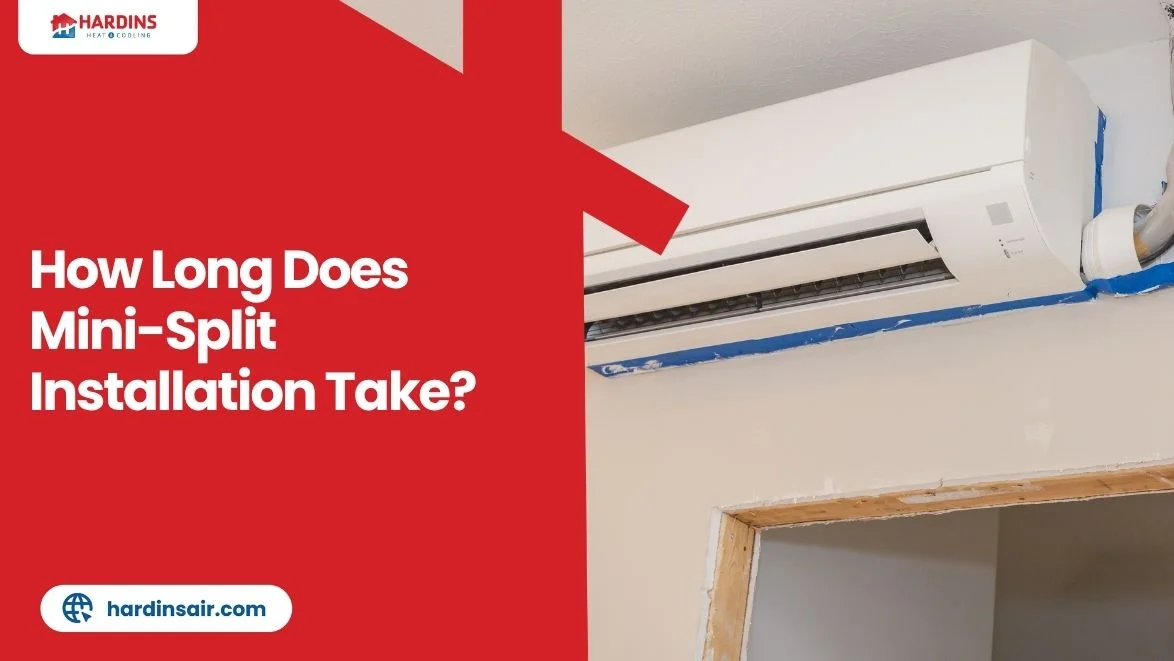
For a standard, single-zone ductless setup, a crew can usually wrap up everything in four to eight hours. That means if the team arrives in the morning, you will likely have cold air blowing by dinner. However, if you are outfitting a larger home with four or five indoor zones, expect the project to stretch over two or three days.
If you are scheduling a mini split installation in Oklahoma City, homeowners often ask about shifting furniture and the amount of time required for mounting hardware, running lines, and testing your unit.
Factors Affecting Installation Time
1. Number of Indoor Zones
Installing a single wall unit goes fast. You drill one hole, mount one plate, set the outdoor pad, and connect the lines.
When you start adding three, four, or five indoor heads, the timeline multiplies. Each room requires its own wall bracket, carefully measured copper piping, control wiring, and drain line. The crew also has to route all those line sets back to a single multi-port outdoor unit, which takes careful routing and extra hands.
2. Electrical Panel Capacity and Wiring Needs
Your new system needs a dedicated electrical circuit to run safely. If your main breaker box already has open slots and can handle the load, running a whip to the disconnect box takes an hour or two.
Things slow down if your main electrical panel is full or outdated. Adding a subpanel, running new heavy-gauge wire across a crawlspace, or upgrading your main service adds several hours and sometimes an extra day to the total project timeline. Booking a reliable mini split AC service near me ensures an electrician handles these power requirements safely on day one.
3. Wall Materials and Exterior Siding
Drilling through standard drywall and wood siding takes minutes. Drilling through solid brick, thick plaster, stone veneer, or concrete block is a completely different story.
Technicians have to use specialized diamond core bits and go slow to avoid cracking your exterior walls. Mounting outdoor units on stucco or brick also takes heavy-duty anchors and precise leveling. These extra masonry steps add noticeable time to the installation process.
4. Distance Between Indoor and Outdoor Units
Mounting an indoor head on an exterior wall directly above the outdoor unit is the fastest setup possible. The copper lines run straight down through the wall without long turns.
If you want an indoor head on an interior wall or across the house, technicians must run long line sets through attics, closets or along exterior walls hidden under protective line hide covers. Measuring, bending, and securing long line runs adds precision work that eats up time.
5. Routine Maintenance and Mini Split AC Service Checks
If you already have ductless units in your home, you might just need a technician to inspect, clean, or repair your existing setup. A complete mini split AC service call takes far less time than a brand-new installation, usually around 1 to 2 hours per unit.
During a service visit, techs deep-clean the indoor blower wheels, flush out condensate drain lines, check refrigerant pressures, and test electrical connections. Keeping up with annual tune-ups prevents unexpected line leaks or electrical failures that could eventually force a full system replacement down the road.
6. Accessibility and Heights
Indoor wall units mounted eight feet off the floor are easy to handle from a standard step ladder. Mounting a unit over a steep stairwell or on a vaulted 14-foot ceiling requires scaffolding or specialized tall ladders.
The same rule applies outdoors. If the unit goes on a flat ground pad, setting it takes 30 minutes. If it needs to be elevated on heavy wall brackets high off the ground to clear snow or landscaping, securing the mount and lifting the heavy outdoor unit takes extra effort and time.
7. Weather Conditions
Technicians work in heat and cold, but extreme weather creates real safety delays. Rain and heavy snow make roof and ladder work dangerous.
More importantly, rain or high humidity can ruin the refrigerant evacuation process. When techs pull a vacuum on your copper lines to remove air and moisture, ambient water vapor entering an open line can contaminate the system. On rainy days, crew members have to take extra precautions to keep every connection completely dry.
Conclusion
Installing a mini-split system is one of the fastest ways to add targeted, high-efficiency cooling and heating to your home. While a simple single-zone job wraps up in just a few hours, multi-zone setups or tricky wall materials can push the timeline into a couple of days. Knowing what factors influence the clock helps you plan your schedule with zero surprises. At Hardin’s Heating and Cooling, our local team works efficiently to get your new ductless system mounted, wired, tested, and blowing comfortable air as quickly as possible.
Frequently Asked Questions
Can I install a mini-split system myself to save time?
DIY kits exist but professional installation ensures electrical circuits are safe, copper lines are leak-free, and lines are pulled to a deep vacuum. Amateur installs often void manufacturer warranties and lead to premature breakdowns.
How long does it take to replace an old mini-split with a new one?
Replacing an existing unit takes roughly 3 to 5 hours. Techs recover the old refrigerant, disconnect electrical lines, swap the indoor and outdoor hardware, and reconnect the system using existing or updated line paths.
Do installers need to cut large holes in my walls?
No, ductless setups require only a small 3-inch hole through the wall. This hole accommodates the thin refrigerant lines, drain tube, and control wiring, leaving your home structure virtually untouched.