

You walk over to the thermostat, glance at the digital display, and realize the house feels cold despite the reading. You set it for 72 degrees but the living room hovers at 65, all while the system hums away endlessly. A heat pump can fall behind when something disrupts airflow, refrigerant circulation, heat transfer, or system controls.
Common causes include clogged air filters, low refrigerant charge, frozen outdoor coils, reversing-valve problems, thermostat issues, and leaky or damaged ductwork. When these breakdowns happen, your equipment consumes power continuously without actually bringing your living space up to temp.
Key Takeaways
- Dust starves the system. Dirty filters choke off air movement, dropping heat output to a trickle.
- Leaks ruin thermal transfer. A low refrigerant charge reduces the system’s ability to absorb and transfer heat, which can increase runtime and strain the compressor.
- Incorrect thermostat readings can cause heating cycles to stop before the occupied space reaches the intended temperature.
- Ice blocks air intake. Cold weather frost turns into solid ice sheets when defrost controls fail.
- Small electrical fixes prevent major motor failure. Weak or failed capacitors can interfere with proper fan or compressor operation, and may place additional stress on motors and other components
Reasons Why Your Heat Pump Is Falling Behind
Let’s take a look at them.
1. Clogged Air Filters and Restricted Airflow
Air filters capture dust, pet hair, lint, and other airborne particles as air circulates through the HVAC system. Leave one in place for almost three or four months and it turns into a solid grey wall.
As the filter becomes clogged, the blower has greater difficulty moving the required volume of air through the system. Restricted airflow can reduce heat delivery, increase system strain, and leave you with weak airflow at the supply registers. Replacing a clogged filter can restore proper airflow, reduce unnecessary strain on the system, and stop you from needing an emergency heat pump repair.
2. Low Refrigerant Levels
Too little refrigerant can severely reduce heating performance.
Refrigerant circulates through the system, absorbing heat at the outdoor coil, and releasing it through the indoor coil. Leaks can develop in coils, tubing, joints, or connections over time because of corrosion, vibration, or physical damage. Pressure drops, the outdoor unit strains nonstop, and the air coming out of your vents feels like a weak spring breeze instead of winter heating. Finding and repairing the leak matters more than simply topping off the refrigerant.
3. A Glitching or Miscalibrated Thermostat
Sometimes the machinery in your attic works fine, but the little plastic box on your living room wall has lost its mind.
Dead batteries, sensor problems, or loose wiring can cause inaccurate temperature readings or interfere with thermostat operation. It thinks the house hit 72 when you are sitting there at 66. Location matters too. Put a thermostat next to a sunny window or directly over a heating register and it may shut the system down too early.
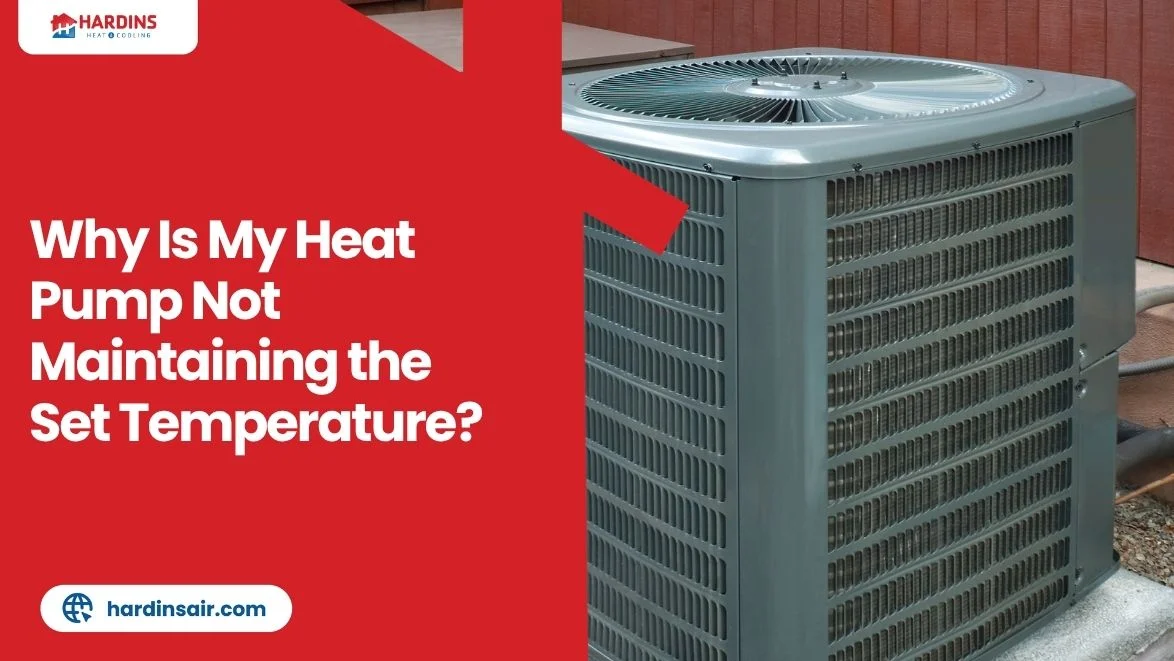
4. Outdoor Unit Covered in Ice or Debris
Winter air holds moisture and that moisture freezes on cold outdoor metal fins. Normally, the system periodically runs an automatic defrost cycle when frost needs to be removed.
If the defrost system fails or debris restricts airflow or drainage around the outdoor unit, excessive ice can build up. Heavy ice buildup can severely restrict airflow and reduce the system’s ability to absorb heat from the outdoor air. Persistent ice buildup may require hiring heat pump repair near me services to diagnose the defrost system and safely address the underlying problem.
5. A Stuck Reversing Valve
Think of the reversing valve as a rail switch for your heating system. It physically changes the direction refrigerant flows so you can switch between air conditioning in July and heating in December.
When the internal slide jams up or its electrical solenoid coil burns out, the unit gets locked in place. You flip the wall thermostat over to heat but cold air keeps pouring into your hallway because that valve refuses to move.
6. Leaky or Damaged Air Ducts
You could have a brand new, high-efficiency heat pump running down in the basement but torn ductwork will ruin everything before that warm air reaches your family room.
Ducts hidden away in cold attics or dark crawlspaces crack open at the joints as age sets in. Your system ends up sucking in freezing attic air through return tears while blowing freshly warmed supply air right under your floorboards. Your equipment runs all day, yet your thermostat numbers never budge.
7. Auxiliary Heat Strip Failures
When outdoor temperatures plunge way below freezing, standard heat pumps struggle to pull enough warmth out of the bitter air. That is why many systems use electric heat strips in the air handler to provide supplemental heat when needed.
If a dedicated breaker trips or an electric heat strip fails, the system may lose some or all of its backup heating capacity. The system relies entirely on basic compressor power, steadily losing the battle as outdoor temperatures drop lower and lower before morning.
8. Electrical Component Degradation
Contactors experience repeated electrical switching that can pit their contact surfaces over time, while capacitors can also deteriorate with age and electrical stress.
A failing capacitor can cause fan motors or compressors to struggle to start or operate properly. The system may hum, struggle to start, or lose heating capacity. Scheduling a timely heat pump repair service replaces those small, inexpensive parts before they take down your expensive compressor motor for good.
Conclusion
A heat pump struggling to maintain temperature usually gives off plenty of early warning signs before quitting completely. Swapping dirty filters, clearing dead leaves away from the outdoor cabinet, and watching for ice buildup go a long way toward keeping things running smoothly.
When tricky mechanical issues, like low refrigerant charge, jammed valves, or failing electrical parts, show up, fixing them quickly protects your wallet. Our team at Hardin’s Heating and Cooling can inspect your system, troubleshoot stubborn temperature drops, and bring reliable heat back to every room in your home.
FAQs
Why is my heat pump running constantly but the temperature is not rising?
Blocked filters, low refrigerant levels, or frozen outdoor coils can reduce the system’s ability to transfer and deliver heat. Failed auxiliary electric heating elements during severe freezing weather will also leave your unit running nonstop without raising indoor temperatures.
How many degrees should a heat pump be able to raise the temperature per hour?
A healthy system raises indoor temperatures by roughly 1 to 1.5 degrees Fahrenheit per hour under normal weather conditions. That recovery rate slows down significantly in freezing weather unless electric auxiliary heat kicks in to help.
Is it normal for a heat pump to blow cool air when it is on heat mode?
Yes. Heat pumps generally supply air that feels cooler than the air produced by a conventional gas furnace, although the exact supply-air temperature varies by system and operating conditions.