

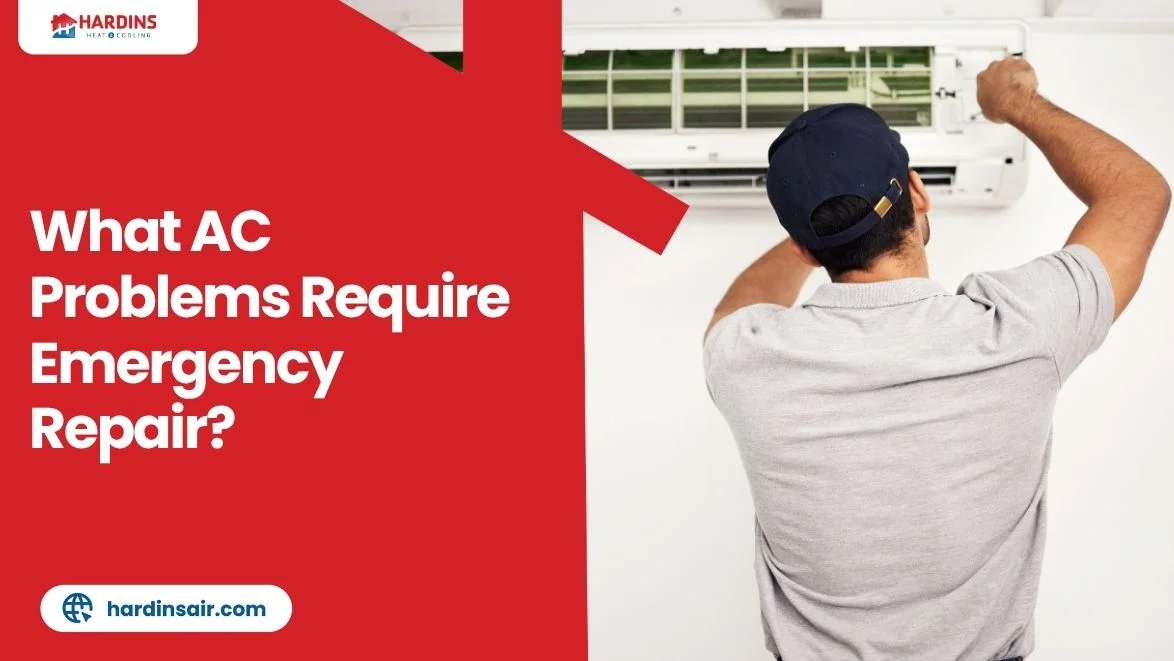
AC problems require emergency repair when they threaten safety, property, or major equipment. Smoke, sparks, repeated breaker trips, severe leaks, and destructive noises need quick attention. Complete cooling failure can also become urgent during dangerous heat. Other problems may safely wait for regular service. Knowing the difference helps you protect your home, avoid further damage, and make a calmer decision when your system suddenly fails.
Key Takeaways
- Electrical warning signs deserve immediate attention. Burning smells, visible smoke, sparks, or repeated breaker trips may signal dangerous electrical trouble. Shut the system down safely and avoid restarting it repeatedly.
- Water and refrigerant problems can become urgent quickly. Heavy indoor leaking can damage walls, ceilings, flooring, or nearby electrical equipment. A suspected major refrigerant leak also needs trained professional handling.
- Severe mechanical symptoms can threaten expensive components. Grinding, screeching, compressor distress, or heavy coil icing may worsen during continued operation. Turning the system off can help limit additional damage.
- Not every AC problem needs emergency service. Mild uneven cooling, a dirty filter, or gradual efficiency loss can often wait. The situation becomes more urgent when safety risks or extreme heat are involved.
Critical AC Problems That Require Immediate Repair
True AC emergencies involve more than ordinary comfort problems. They usually create an immediate safety hazard, rapid property damage, or serious equipment risk. These warning signs justify prompt action rather than waiting several days.
1. Burning Smell, Smoke, or Electrical Sparks
A burning odor should never become background noise around your AC. Overheated wiring, failing motors, damaged terminals, or electrical arcing may cause it. Visible sparks or smoke make the situation even more serious. Turn the system off if you can do so safely.
If active fire appears, leave the area and follow fire emergency procedures. Don’t restart the unit after the smell disappears. Professional AC repair services should inspect the electrical fault before cooling resumes.
2. Repeated Circuit Breaker Trips
A breaker protects the electrical circuit when the current becomes unsafe. One isolated trip does not always mean an emergency. Repeated trips during AC startup or operation need prompt investigation. A failing compressor, motor problem, short circuit, damaged wiring, or overloaded circuit may be responsible.
Don’t keep resetting the breaker to force another cooling cycle. Repeated resets can hide a serious electrical problem. Leave the system off until a qualified technician identifies why the protective device keeps opening.
3. Major Refrigerant Leak
A major refrigerant leak requires professional attention rather than homeowner experimentation. You might notice sudden cooling loss, hissing, icing, or damaged refrigerant tubing. Some refrigerants can create toxicity, flammability, asphyxiation, or physical hazards under certain conditions. Keep people away from an obvious leak whenever possible.
Don’t touch leaking lines or attempt to add refrigerant yourself. A trained technician should locate the leak, assess system damage, recover refrigerant when required, and determine whether repair remains practical.
4. Severe Water Leak or AC Flooding
Heavy water leakage can damage building materials surprisingly fast. A clogged condensate line, failed drain pump, cracked pan, or thawing coil may release water indoors. Shut cooling down if water approaches wiring or electrical equipment. Move belongings away when you can do so safely.
Never reach into wet HVAC components to stop the leak. If water keeps spreading across floors or ceilings, urgent AC repair services near me can help address the source before property damage grows.
5. Loud Grinding, Screeching, or Metal-on-Metal Sounds
Sudden mechanical noise often means something is moving incorrectly inside the system. Grinding may involve bearings, motors, blower assemblies, or damaged rotating parts. Screeching can point toward motor or fan problems. Metal-on-metal sounds deserve especially quick attention because continued operation may damage surrounding components.
Turn the AC off rather than waiting for the noise to disappear. Don’t remove equipment panels to investigate spinning parts. A technician can isolate the source and decide whether operation remains safe.
6. Complete AC Failure During Extreme Heat
Complete cooling failure becomes more urgent when indoor heat turns dangerous. Older adults, infants, and people with certain medical conditions face greater heat-related risks. Household conditions matter just as much as the outdoor temperature.
If indoor temperatures keep rising, seek a reliably air-conditioned location while arranging repairs. Fans alone may not provide enough protection during severe heat. Emergency service makes more sense when your household has vulnerable occupants, no backup cooling, and increasingly unsafe indoor conditions.
7. AC Compressor Failure Symptoms
Compressor trouble can stop effective cooling even while other components still run. Warning signs include hard starting, loud buzzing, repeated breaker trips, unusual outdoor noises, or a compressor that will not start. However, those symptoms don’t automatically prove internal compressor damage.
Bad capacitors, wiring faults, and refrigerant problems can appear similar. Professional AC repair in Yukon will test electrical and refrigeration conditions first. Avoid repeated restart attempts because severe compressor distress can worsen under continued operation.
8. Frozen AC Coil Combined With Severe Cooling Problems
A frozen evaporator coil needs more than another thermostat adjustment. Ice often develops because airflow or refrigerant conditions have become abnormal. Heavy icing can restrict airflow further and leave your home barely cooling.
Continuing to run the system may also increase compressor stress. Turn cooling off and let the ice thaw naturally. Never chip the coil with tools because delicate tubing can be punctured. Repeated freezing, major cooling loss, or suspected refrigerant trouble requires prompt professional diagnosis.
Which AC Problems Usually Aren’t Emergency Repairs?
Some AC issues are inconvenient without creating immediate danger. When the system remains electrically safe and no rapid damage is developing, these problems can usually wait for a scheduled appointment:
- A dirty air filter: Replace an accessible filter when it looks clogged. Schedule service if weak airflow continues afterward.
- Mild uneven cooling: One warmer room may involve airflow balance, duct leakage, insulation, or closed registers.
- A slightly inaccurate thermostat: Check batteries, settings, schedules, and temperature readings before assuming major equipment trouble.
- Gradual loss of cooling performance: Slow decline deserves attention soon. It becomes urgent if electrical, refrigerant, or overheating symptoms appear.
- A minor rattle without worsening symptoms: Loose panels can sometimes vibrate. Grinding, screeching, or violent mechanical sounds require faster action.
- A single breaker trip: One trip warrants observation and troubleshooting. Repeated trips should not be treated as routine.
- Higher energy bills alone: Rising costs deserve diagnosis, especially with longer runtimes. However, billing changes without safety symptoms usually allow normal scheduling.
What Should You Do Before the Emergency AC Technician Arrives?
Once urgent service is arranged, focus on preventing additional damage. These simple steps protect your home and give the technician useful information.
Turn Off the AC if There’s a Safety Hazard
Shut the AC down when you notice smoke, sparks, severe mechanical noise, or flooding near equipment. Use the thermostat or normal disconnect only when safe. Don’t approach equipment surrounded by water or showing active electrical arcing. Stay clear until help arrives.
Stop the Water Damage
Move belongings away from spreading water whenever the area remains safe. Use towels or containers for accessible water outside electrical equipment. Don’t open wet panels. The technician must determine whether drainage trouble, icing, or another failure caused the leak. Keep children and pets away.
Don’t Keep Resetting the Breaker
Repeated breaker trips mean the circuit needs diagnosis. Resetting it again and again can force damaged equipment back into operation. Leave the breaker alone after recurring trips. Tell the technician how many times it opened and when. That timing can reveal useful patterns.
Don’t Attempt Refrigerant or Electrical Repairs Yourself
Leave refrigerant handling, capacitor testing, and internal electrical work to trained professionals. Refrigerant exposure can cause serious hazards under some conditions. Electrical components may also remain dangerous after operation stops. Avoid opening panels or cutting refrigerant lines. Keep others away from the equipment.
Gather Useful Information for the Technician
Write down when the problem started and what happened beforehand. Note unusual smells, sounds, thermostat messages, visible ice, water, or breaker trips. Photos taken from a safe distance may also help explain intermittent symptoms. Also note whether cooling stopped suddenly.
When Is It Safe to Wait for Regular AC Repair?
Waiting for regular service is usually reasonable when your home remains safe, the problem stays stable, and no rapid damage is developing. Consider these signs before choosing a routine appointment:
- The AC still provides dependable cooling: Slightly reduced performance can often wait when indoor temperatures remain comfortable and safe.
- No electrical warning signs appear: Burning odors, smoke, sparks, or repeated breaker trips immediately increase urgency.
- There is no significant water leakage: A tiny condensation issue differs greatly from water spreading through ceilings or floors.
- You don’t suspect a major refrigerant leak: Sudden hissing, heavy icing, or severe cooling loss deserves faster attention.
- The system isn’t making destructive sounds: Mild vibration may wait. Grinding, screeching, or metal contact should not.
- Indoor temperatures remain safe: A failure during mild weather carries less immediate risk than one during dangerous heat.
- The problem isn’t getting worse quickly: Schedule service promptly rather than ignoring it. A manageable issue can become urgent if symptoms suddenly change.
Conclusion
Emergency AC repair is necessary when a problem threatens safety, property, or major equipment. Burning smells, sparks, repeated breaker trips, severe leaks, destructive noises, and serious compressor trouble deserve quick attention.
Complete cooling loss can also become urgent during extreme heat. Minor airflow problems or gradual performance changes often allow regular scheduling when no hazards appear. When danger develops, turn the system off safely and avoid electrical or refrigerant repairs yourself.
If your cooling system develops an urgent problem, contact Hardin’s Heating & Cooling for prompt diagnosis and professional repair support.