

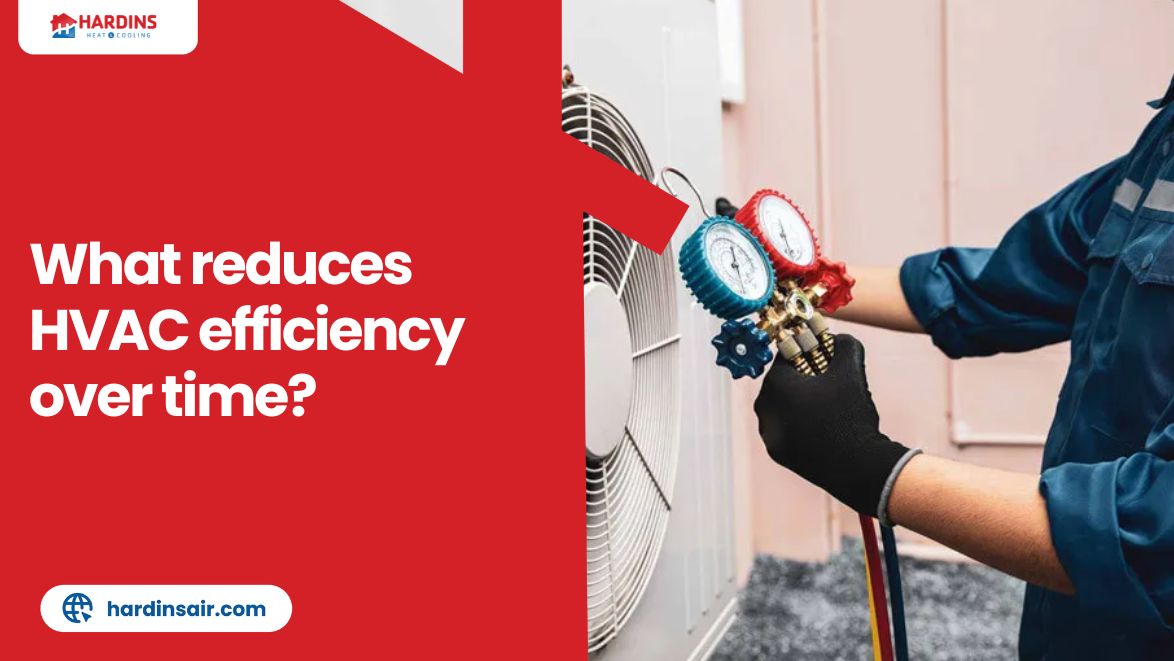
HVAC efficiency doesn’t disappear overnight. It happens slowly. Dirty filters, old parts, skipped maintenance all that stuff adds up and suddenly your system’s fighting harder just to give you less comfort than you used to get. Understanding what causes that decline is the first step to stopping it.
Core Takeaways
- Most HVAC problems sneak up; you probably won’t notice your system getting less efficient until your energy bills jump or you realize the air just isn’t as cool as it used to be.
- The usual suspects are dirty filters, coils covered in grime, or a refrigerant leak. But regular maintenance stops these issues before they start.
- Age compounds everything. A system that was 16 SEER when new is not delivering 16 SEER ten years later without consistent upkeep.
- Skipping your yearly tune-up actually wears down the main parts of your system faster, even if everything seems fine.
How HVAC Efficiency Degrades and Why It Matters
HVAC efficiency does not drop all at once. It slides gradually and most homeowners do not notice until their system is working significantly harder than it should be.
Every unit is rated at a specific efficiency level when new. That rating assumes clean components, proper refrigerant charge and regular servicing. Filters clog, coils collect grime and refrigerant levels drop slowly over time. Each issue has a modest impact individually but together they add up to a 30% efficiency loss.
You will see the extra cost on your utility bill right away. When your system’s efficiency drops to 70 percent, it’s using about 30 percent more electricity just to keep you comfortable.
What Causes HVAC Efficiency to Decline Over Time?
Most efficiency problems trace back to the same handful of causes. None of them is complicated but all of them get worse the longer they go unaddressed.
Dirty or Clogged Air Filters
When your filter gets all clogged up, air can’t really move through the setup the way it should and then the whole thing starts acting up. The blower ends up in overtime mode, the coils heat up beyond where they are meant to and every part has to struggle just to keep the airflow moving. So it makes sense to peek at your filters once a month, especially if you are running the system a lot and swap them out before they look visibly gunked.
Dirty Coils and Restricted Airflow
Now, if the coils get coated in dust or grime, that’s another headache. A dirty condenser coil outside makes it tough for the system to dump heat. Both issues mean your cooling drops and the compressor ends up doing extra work just to keep up.
Refrigerant Leaks and Low Charge Levels
Low refrigerant is one of the more damaging efficiency killers because it puts direct strain on the compressor. A system running with low charge works longer cycles, cools less effectively and risks compressor failure if left unaddressed. Topping up refrigerant without finding and fixing the leak is a temporary fix that does not solve the underlying problem. A technician providing air conditioning service Yukon OK, will pressure test the system to locate the leak source rather than just recharging and moving on.
Worn or Failing Capacitors and Contactors
Capacitors and contactors degrade over time and a weakening capacitor makes the motor work harder to start and run. The efficiency loss from a failing capacitor is real even before the component fails. Catching these during a routine service visit costs far less than dealing with a system that stops working entirely.
How Age Affects HVAC Efficiency
As HVAC systems age, their efficiency naturally declines over time
Efficiency Ratings Drop as Units Age
A unit rated at 16 SEER when new is not delivering 16 SEER ten years later. Efficiency ratings are measured under ideal laboratory conditions. Real-world use, wear and environmental exposure all pull that number down over time. Most systems lose up to 20% of their original efficiency within the first five to seven years without consistent maintenance.
When Old Systems Cost More to Run Than Replace
At some point, the monthly cost of running an aging, inefficient system exceeds what a newer unit would cost to operate. A system from the early 2000s running at 10 SEER costs significantly more to run each month than a current 18 SEER replacement. When the efficiency gap is wide enough the new equipment pays for itself through utility savings faster than most homeowners expect.
How Worn Components Compound the Problem
An aging system does not just lose efficiency on paper. Worn bearings, degraded insulation on electrical components and a compressor with years of hard use all contribute to real-world performance decline. Each worn component adds a small inefficiency and those small losses stack up resulting in a unit that costs more to operate.
Read Also: What is the average cost of AC repair near me?
Signs Your HVAC System Is Losing Efficiency
These are the warning signs worth paying attention to before a minor efficiency problem becomes a major repair.
Rising Energy Bills With No Change in Usage
If your utility bill is climbing but your usage habits have not changed, the system is working harder than it should. A sudden spike is easy to notice but gradual increases over several months are often dismissed. Pull up last year’s bills and compare month to month. A consistent upward trend is a clear signal that something is off.
Uneven Heating or Cooling Across Rooms
If one room is roasting and another is freezing, even though the thermostat claims everything’s perfect, then you are probably dealing with airflow issues, faulty ducts or a tired system. It’s a subtle sign that your system’s losing efficiency but people usually chalk it up to something else.
System Running Longer Cycles Than Usual
When things are working the way they should, your system hits the target temperature and takes a break. A system losing efficiency runs longer to achieve the same result. If the unit seems to run almost continuously during moderate weather conditions. It means your system’s struggling and burning extra energy just to do what it used to. You will notice the difference shows up right on your bill. Getting HVAC contractors Yukon OK, to inspect the system at that point catches the underlying cause before it turns into a compressor failure or a full system replacement.
Unusual Noises or Increased Humidity Indoors
If you hear rattling, grinding, or random clicks when your system kicks on, chances are it’s wearing down and not performing like it used to. Getting muggy air inside when the system’s running is another big red flag. Both issues mean your unit needs some attention before the problem balloons into something more costly.
Conclusion
HVAC efficiency loss is slow and becomes expensive by the time most people catch it. Regular maintenance, early attention to warning signs and honest conversations with a qualified technician keep a system running properly. When your system starts showing signs of decline, do not wait for a breakdown to show up. For reliable heating and cooling Yukon homeowners trust, contact Hardin’s Heating and Cooling before a small problem becomes a costly one
FAQs
How much efficiency does an HVAC system lose per year?
Most systems roughly lose 5 percent of their original efficiency per year without proper maintenance. A well-maintained unit holds its efficiency rating significantly longer. Skipped service visits accelerate that decline faster than normal wear alone.
Can a dirty filter really affect HVAC efficiency that much
Yes. A heavily clogged filter can reduce airflow enough to drop system efficiency by 15 percent or more. It also forces the motor to work harder as it increases energy consumption and accelerates wear on components that are expensive to replace.
How to know if the HVAC system needs replacing or just servicing?
If the system is under ten years old and the efficiency loss traces back to maintenance issues, servicing almost always makes sense. If the unit is older, repair costs are climbing and efficiency ratings have dropped significantly compared to current equipment, replacement starts making more financial sense. A qualified technician can assess where your system actually sits.