

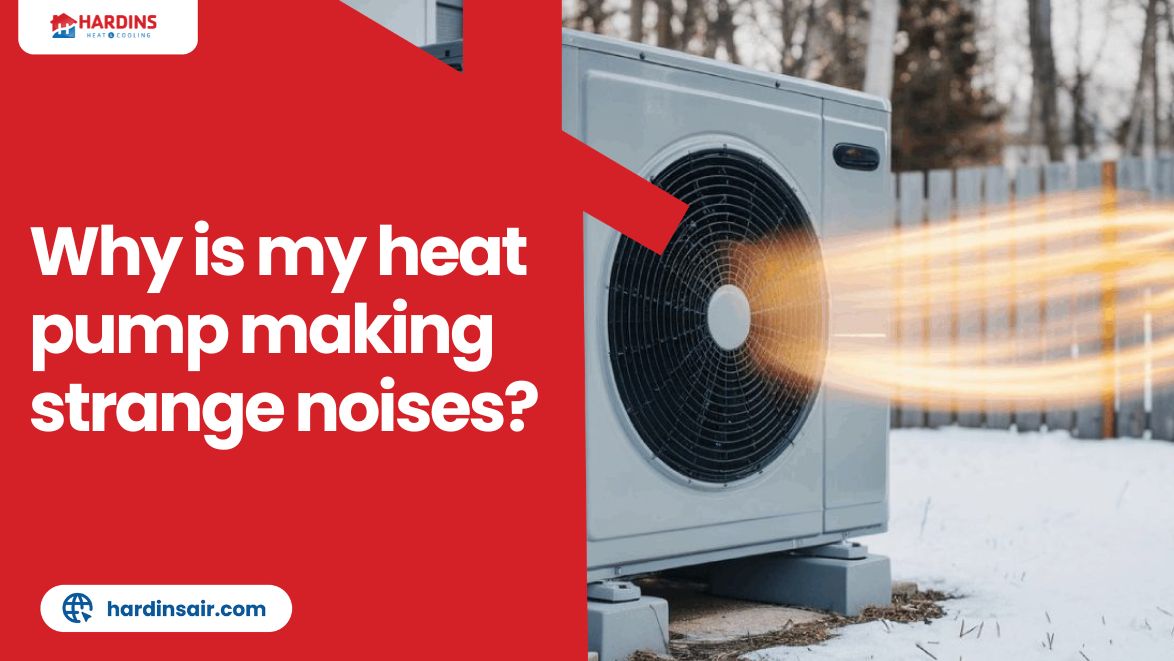
Strange sounds from a heat pump often start small and then grow louder with time. They can point to wear, blocked airflow, or deeper mechanical trouble. That leaves many homeowners asking why their system suddenly sounds wrong.
| Quick Answer
A heat pump usually makes odd noises when something inside is loose, dirty, frozen, restricted, or failing. The sound itself often gives the best clue. A hiss may suggest airflow or refrigerant trouble. A grinding sound may signal serious motor wear. Uncovering the problem quickly matters because problems are often simpler to fix when they first start. They are also less likely to harm the whole system. |
Common Heat Pump Noises and Their Causes
Different noises point to different faults inside the system. Once you match the sound to the likely source, the next step becomes clearer.
1. Hissing or Whistling Sounds
- Cause: Escaping refrigerant or restricted airflow can create these sharp sounds.
- What It Means: Pressure is moving through a small opening or blocked path.
- What to Do: Check the filter and vents first for obvious blockage. If the sound stays sharp, schedule a heat pump repair oklahoma city soon.
2. Rattling or Clanking Noises
- Cause: Loose screws, broken blades, or panel movement often trigger rattling sounds. Outdoor vibration and storm debris can make this sound much worse.
- What It Means: Something is shaking during operation and may strike nearby parts.
- What to Do: Look for sticks, leaves, or loose cover panels around the outdoor unit. If the sound returns after startup, turn the system off and schedule an inspection.
3. Banging or Thumping Sounds
- Cause: Dirt buildup or an obstruction can throw the blower assembly off balance.
- What It Means: The fan or blower is moving unevenly during each cycle. Airflow may weaken and comfort may vary from room to room.
- What to Do: Turn the system off if the sound feels heavy or forceful. A cleaning and inspection can prevent extra stress on the motor.
4. Grinding Noises
- Cause: Grinding usually comes from dry bearings or worn motor parts.
- What It Means: Metal surfaces may be rubbing together with damaging friction. This is one of the clearest signs you need help fast.
- What to Do: Shut the unit down and avoid another full cycle. A prompt heat pump repair service may save the motor.
5. Buzzing or Clicking Sounds
- Cause: Buzzing or clicking often starts with stressed electrical parts. These sounds often come from the outdoor control compartment.
- What It Means: A bad capacitor or contactor can interrupt a smooth startup. Loud repeated clicking is not normal and may lead to failure. You may also notice delayed starts or short cycling.
- What to Do: Electrical problems need safe testing by a trained technician.
6. Gurgling or Bubbling Sounds
- Cause: Gurgling or bubbling can come from refrigerant flow problems or trapped air.
- What It Means: The system may not be moving refrigerant evenly through the coil. Heating or cooling performance can fade as pressure becomes unstable.
- What to Do: Watch for ice, weak airflow, or longer run times. Repeated fluid sounds need professional inspection before efficiency drops further.
7. Squealing or Squeaking Sounds
- Cause: Squealing often points to worn moving parts inside the fan area.
- What It Means: Moving parts may no longer spin smoothly under normal load. That increases stress on the motor and can eventually cut airflow.
- What to Do: Turn the system off if the squeal lasts past startup. Early repair helps protect airflow and keeps other parts from straining.
8. Popping or Tapping Noises
- Cause: Popping or tapping often comes from ductwork reacting to temperature changes. Metal expands and contracts as warm and cool air move through it. In many homes, a light version of this sound is normal.
- What It Means: Light popping can be normal as metal expands or contracts. Loud and frequent taps may signal a pressure imbalance or loose duct sections.
- What to Do: Notice when the sound happens and how strong it feels. If it becomes louder or starts with weak airflow, have the duct system inspected.
9. Continuous Loud Fan Noise
- Cause: Constant loud fan noise often means obstruction or fan motor strain.
- What It Means: Debris may block the blades or the motor may be failing. Airflow can drop while the risk of overheating climbs.
- What to Do: Clear visible debris around the cabinet and listen again. An ongoing loud operation often calls for professional heat pump services.
Conclusion
Strange sounds usually mean your system needs attention before a bigger failure develops. The exact noise often will point toward airflow trouble, loose hardware, frozen coils, electrical faults, or motor wear. That is why listening closely can help you respond faster. Minor issues sometimes stay manageable when caught before other parts start straining. If a sound repeats, grows louder, or changes system performance, schedule an inspection soon.
Hardin’s Heating and Cooling provides HVAC repair, installation, and maintenance in Yukon and nearby Oklahoma City communities. Our team emphasizes reliable service and long-term customer care. Contact Hardin’s Heating and Cooling when unusual noise starts and you want dependable local help.
Read Also: Can I get same-day AC installation in Yukon?
FAQs
What should I do if my heat pump makes a hissing or whistling sound?
Start by checking the air filter and nearby vents for blockage. If the sound stays sharp or constant, turn the system off. A persistent hiss can point to airflow restriction or refrigerant trouble inside the system.
Can a dirty filter cause strange noises in a heat pump?
Yes. A dirty filter can absolutely cause strange sounds. That airflow restriction can lead to whistling, strain, and freezing. It may also force the system to work harder and can even lead to evaporator coil icing.
How often should I have my heat pump inspected?
Have it inspected at least once each year and ideally before heavy seasonal use. Regular maintenance helps catch loose parts, airflow problems, and electrical wear early. It also spots refrigerant issues before repairs become costlier.