

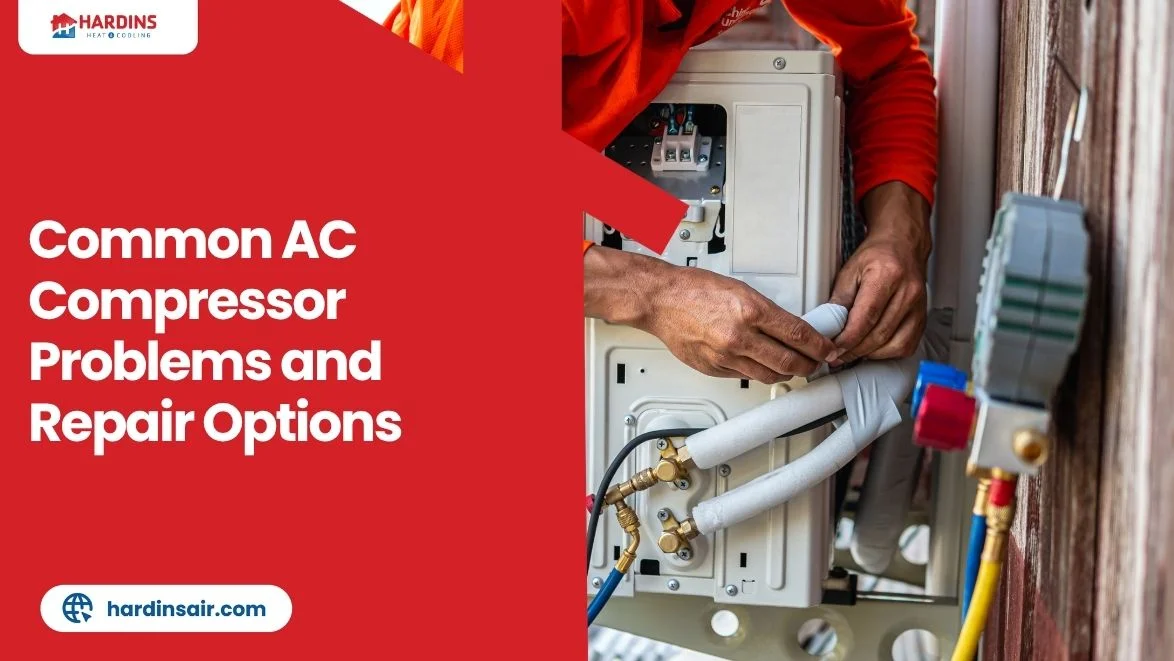
AC compressor problems usually come from electrical faults, refrigerant issues, overheating, or internal damage. Some problems affect supporting parts rather than the compressor itself. That difference matters because repairs range from replacing capacitors to replacing compressors. Careful diagnosis prevents unnecessary costs and protects your cooling system. Knowing the warning signs also helps you act before minor trouble becomes expensive failure.
Key Takeaways
|
What Are the Most Common AC Compressor Problems?
Your compressor circulates refrigerant through the cooling system while raising its pressure and temperature. When that process fails, cooling performance can drop quickly. However, several different faults can create similar warning signs. Warm air, humming, breaker trips, hard starting, and repeated shutdowns need careful diagnosis.
1. Failed Capacitor or Other Electrical Components
Electrical faults often create symptoms that look like compressor failure. A weak capacitor may prevent the compressor from starting correctly. You might hear humming while the outdoor unit struggles.
Contactors, relays, damaged wiring, loose terminals, or voltage problems can behave similarly. Reliable AC repair services test these components before recommending compressor replacement. That testing can uncover a smaller repair behind a serious-looking problem.
Never handle a capacitor yourself, even after switching off the power. It can retain dangerous electrical energy after disconnection.
2. Hard Starting or Compressor Struggling to Start
A hard-starting compressor needs unusual effort before it begins running. You may hear clicking, humming, or repeated starting attempts. The unit may also start briefly before shutting down again.
A weak capacitor or low voltage can cause difficult starts. Internal mechanical wear can create extra resistance inside the compressor. Repeated hard starts also create additional heat and electrical stress.
Over time, that strain can shorten compressor service life. Early testing matters when startup becomes noticeably rough or delayed.
3. Low Refrigerant or Refrigerant Leaks
Low refrigerant usually means refrigerant escaped somewhere in the sealed system. It doesn’t disappear simply because your air conditioner gets older.
When levels drop, cooling can weaken and run times often increase. Evaporator icing may also develop under certain low-pressure conditions. Those operating conditions can place additional strain on the compressor.
A technician should locate the leak before adding refrigerant. Repeatedly topping off a leaking system only delays the real repair.
4. Overcharged or Incorrect Refrigerant
Too much refrigerant can cause problems just like too little. Overcharging can create abnormal operating pressures and reduce cooling efficiency. Those pressures may force the compressor to work harder.
Using unsuitable refrigerant creates another serious risk. Refrigerants operate with specific pressures, oils, and equipment requirements. An incorrect type can damage performance and system reliability.
Proper charging requires measurements rather than guesswork. Technicians use manufacturer specifications, pressures, temperatures, superheat, or subcooling when appropriate.
5. Compressor Overheating
Excessive heat can trigger protective shutdowns inside the compressor. Continued overheating may eventually damage electrical insulation and internal components.
Dirty condenser coils can make outdoor heat removal much harder. A failing condenser fan creates similar stress on the system. Grass, leaves, or nearby debris can also restrict airflow.
You can keep the outdoor unit clear of obvious debris. However, repeated overheating needs professional testing of airflow, pressures, and electrical load.
6. Oil Loss, Lubrication Problems, or Contamination
Moving compressor parts depend on oil for reliable lubrication. That oil reduces friction across bearings and other internal surfaces.
Certain refrigerant problems can interfere with proper lubrication. Liquid refrigerant entering the compressor may dilute protective oil. Moisture, debris, or degraded lubricant can also contaminate internal parts.
Poor lubrication increases friction, heat, and mechanical wear. Severe contamination may even damage a newly installed replacement compressor. Technicians should therefore identify the original cause before replacing equipment.
7. Damaged, Restricted, or Clogged Refrigerant Lines
Refrigerant needs a clear path through correctly sized system lines. Kinks, debris, restrictions, or damaged tubing can disrupt normal flow.
A restriction may create unusual pressure differences across the system. Cooling capacity can fall even while the compressor keeps running. Filter-driers or metering components can also develop troublesome restrictions.
These faults sometimes resemble a weak compressor during basic observation. Pressure and temperature measurements help technicians separate restrictions from internal damage.
8. Internal Mechanical Compressor Failure
Internal compressor damage represents the most serious failure category. Bearings, scrolls, valves, windings, or other internal components may fail.
A damaged compressor might grind, buzz, trip breakers, or refuse to start. High current draw may also indicate a locked mechanical condition. Burned windings can create electrical faults or repeated shutdowns.
Technicians test winding resistance, insulation, amperage, and starting behavior. They also compare operating pressures across the refrigeration system.
External repairs cannot restore badly damaged internal mechanical components. Severe internal failure usually makes compressor replacement the practical option.
Can an AC Compressor Be Repaired Instead of Replaced?
Yes, some compressor-related problems can be repaired without replacing the compressor. The key question involves whether its internal parts remain healthy.
Homeowners searching for AC repair services near me may be dealing with a supporting component failure, rather than a failed compressor. A bad capacitor, contactor, wiring connection, leak, or airflow restriction may cause compressor symptoms. Correcting those faults can restore normal operation.
However, sealed residential compressors usually aren’t rebuilt inside your home. Failed windings, seized parts, or serious mechanical damage generally require replacement.
System age also matters when choosing the better repair. Warranty coverage, refrigerant type, repair history, and overall condition affect value. Older systems may justify comparing compressor replacement against complete system replacement.
What Are the Repair Options for a Bad AC Compressor?
The correct repair depends entirely on what testing discovers. A good diagnosis fixes the cause rather than masking its symptoms.
Repair the Electrical Components
Electrical repairs often offer the simplest compressor-related solution. Technicians can replace failed capacitors, contactors, relays, or damaged wiring.
They should also inspect terminals and incoming voltage. Loose electrical connections can overheat and create intermittent failures.
Compressor windings need testing before major replacement decisions. Humming alone does not prove the compressor has failed.
Correct Refrigerant Problems
Refrigerant problems require more than adding another charge. Technicians should locate leaks and determine whether repairs remain practical.
Repairable leaks should be corrected before recharging the system. An overcharged system needs refrigerant adjusted to proper specifications.
Afterward, pressure and temperature readings should confirm stable operation. That final check helps protect compressor performance after repairs.
Fix Airflow and Overheating Problems
Better airflow can reduce compressor temperature and operating stress. Dirty condenser coils may need cleaning when buildup blocks heat transfer.
A weak condenser fan may require repair or replacement. Severely clogged filters can also hurt overall system airflow.
Technicians should investigate repeated short cycling as well. Frequent starts increase compressor heat and electrical stress.
Install a Hard-Start Device When Appropriate
A hard-start device gives certain compressors additional starting assistance. It helps during the brief period when startup demand peaks.
However, it should never become a universal compressor fix. Technicians should test voltage, capacitors, wiring, and compressor condition first.
A suitable device may help an otherwise healthy compressor start. It cannot repair burned windings, seized bearings, or mechanical damage.
Replace the AC Compressor
Replacement becomes reasonable when technicians confirm serious internal damage. Grounded windings, seized components, severe contamination, or mechanical failure often justify it.
The technician should also determine why the original compressor failed. Installing another compressor without correcting that cause risks repeat damage.
For homeowners considering AC repair in Yukon, OK, equipment age deserves equal attention. A newer unit under warranty may justify compressor replacement. An older system with recurring failures may favor broader replacement.
Compare repair costs against remaining system life and efficiency. Refrigerant type, compatibility, and previous repairs also matter. A good contractor should clearly explain both options before you decide.
Conclusion
AC compressor trouble can begin with electrical faults, refrigerant problems, overheating, restrictions, lubrication issues, or internal damage. Many causes remain repairable when the compressor’s internal components stay healthy.
Severe winding failure, seized parts, or major mechanical damage often make replacement more sensible. Accurate diagnosis matters because several smaller faults can imitate compressor failure. That approach can protect your comfort while avoiding unnecessary replacement costs later.
If your AC hums, trips breakers, overheats, or stops cooling properly, contact Hardin’s Heating & Cooling for careful diagnosis and a repair recommendation that fits your system’s condition and age.